


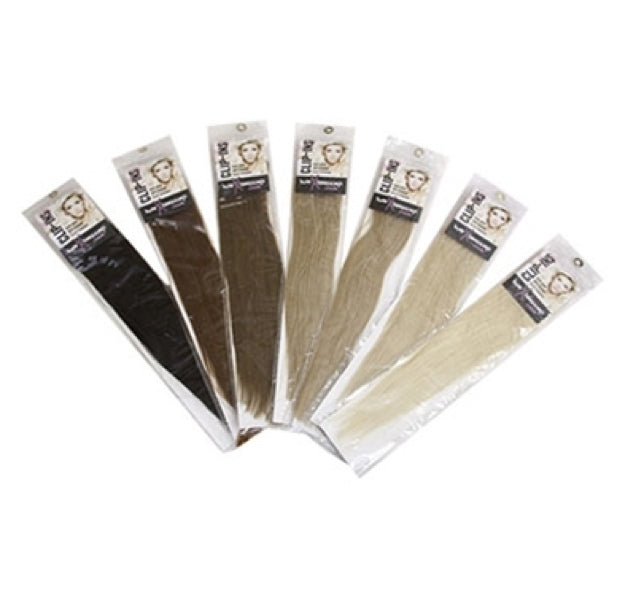
Hair extensions can be applied in several different ways depending on the extension method you choose.
Some methods use individual strands secured with keratin bonds, Micro Rings or Nano Rings. Tape-In extensions use flat adhesive attachment panels, while Hair Wefts can be installed using a variety of professional weave techniques. Removable methods such as Clip-Ins and Ponytails can be applied and removed at home.
There is therefore no single fitting technique that applies to every type of hair extension.
This guide explains how the main HairXtensions methods are applied, which methods normally require professional fitting, what should be considered before application and where to find our detailed step-by-step fitting and removal tutorials.
Quick answer: Nail-Tips are professionally fused using a heat connector, Stick-Tips use Micro Rings, Nano-Tips use smaller Nano Rings, Micro-Loops use a pre-looped ring system, Tape-Ins use flat adhesive panels and Hair Wefts can be installed using several professional fitting techniques. Clip-Ins and Clip-In Ponytails are removable and can usually be applied at home.
What Should Be Considered Before Applying Hair Extensions?
Correct application begins before the first extension is attached.
The natural hair, desired result and chosen extension method should all be considered together.
Check the strength, density and general condition of the natural hair before choosing a fitted method.
Decide whether a fitted strand, Tape-In, Hair Weft or removable method best suits the client and desired result.
Choose an extension length that suits the desired style and blends realistically with the natural hair.
The amount and individual weight of fitted extension hair should be appropriate for the natural hair supporting it.
Choose the closest extension shade before fitting rather than planning to bleach or chemically alter the extensions afterwards.
Make sure the wearer understands the washing, brushing, drying and maintenance required for the selected method.
Which Hair Extensions Should Be Professionally Fitted?
Our professionally fitted extension methods require correct sectioning, placement, specialist tools and an appropriate removal technique.
This includes methods such as:
- Nail-Tip / U-Tip
- Stick-Tip / I-Tip
- Nano-Tip
- Micro-Loop
- Tape-In
- Professionally fitted Hair Wefts and Weaves
Clip-In sets, Clip-In Ponytails and Clip-In Fringe pieces are removable methods designed to be applied and removed without a permanent salon fitting.
How Are the Different Types of Hair Extensions Applied?
Nail-Tip / U-Tip
Individual pre-bonded strands are fused around suitable sections of natural hair using a professional heat connector.
Learn More ↓Stick-Tip / I-Tip
Individual Stick-Tip strands are secured to suitable sections of natural hair using separate Micro Rings and professional pliers.
Learn More ↓Nano-Tip
Individual Nano-Tip strands are fitted using much smaller Nano Rings designed for the Nano-Tip attachment.
Learn More ↓Micro-Loop
Each strand has a pre-looped ring system that assists with feeding the natural hair through before the ring is secured.
Learn More ↓Tape-In
Flat extension panels use adhesive tape attachments positioned around suitable sections of natural hair.
Learn More ↓Hair Wefts / Weaves
A continuous Hair Weft can be fitted using several techniques depending on the chosen professional weave system.
Learn More ↓Clip-In Sets
Removable weft pieces use small clips that attach to sections of the natural hair and can be taken out again the same day.
Learn More ↓Clip-In Ponytails
A removable Ponytail extension is secured around an existing natural ponytail for a quick temporary transformation.
Shop Ponytails →How Are Nail-Tip / U-Tip Hair Extensions Applied?
Nail-Tip extensions are a professional heat-fusion extension method.
Each individual strand has a pre-bonded tip. During application, an appropriate section of natural hair is isolated and the pre-bonded attachment is softened using a professional heat connector.
The softened material is then professionally formed around the natural hair to create a secure individual attachment.
Important Fitting Considerations
- Natural hair should be correctly sectioned.
- The section must be appropriate for the extension strand.
- Attachments should be positioned without excessive scalp tension.
- A suitable professional heat connector should be used.
- Application settings should suit the bond and equipment being used.
- The bond should be formed neatly and consistently.
There is no single universal fitting temperature that should automatically be used for every keratin bond and every heat connector. Follow the instructions appropriate for the bonding material and professional tool being used.
How Are Stick-Tip / I-Tip Hair Extensions Applied?
Stick-Tip extensions are fitted using a Micro Ring attachment method rather than heat fusion.
A suitable section of natural hair is passed through a Micro Ring and the Stick-Tip extension is positioned within the attachment.
Professional application pliers are then used to close the ring securely.
Correct Application Depends On:
- Choosing a compatible Micro Ring
- Using an appropriate natural hair section
- Correct positioning
- Closing the ring evenly
- Avoiding excessive tension
- Checking the finished strand is secure
Stick-Tip fitting is heat-free, but heat-free does not mean technique-free. Ring choice, section size and correct clamping all matter.
How Are Nano-Tip Hair Extensions Applied?
Nano-Tip extensions are another individual strand method, but instead of a conventional Micro Ring they use a much smaller Nano Ring.
A suitable section of natural hair is passed through the Nano Ring, the Nano-Tip extension is positioned and the ring is professionally secured.
Their smaller attachment size can make Nano-Tips attractive when a more discreet ring-based fitting is required.
A smaller ring does not mean sectioning or extension weight can be ignored. The natural hair still needs to safely and comfortably support the individual extension strand.
How Are Micro-Loop Hair Extensions Applied?
Micro-Loop extensions are designed with a pre-looped attachment system to assist with application.
The loop helps draw an appropriate section of natural hair through the fitted ring before the extension is positioned and the ring is secured with suitable professional pliers.
Like other ring-based methods, correct section size, placement and clamping remain important.
Shop Micro-Loop Extensions View Micro-Loop Fitting GuideHow Are Tape-In Hair Extensions Applied?
Tape-In extensions use flat adhesive attachment panels rather than individual bonds or rings.
During professional application, suitable sections of natural hair are prepared and the Tape-In panels are positioned according to the tape fitting system.
Careful sectioning and placement are important so the finished tapes sit flat and comfortably without excessive natural hair being trapped or insufficient hair supporting the extension.
Before Tape-In Application
- The natural hair should be properly prepared.
- Root areas should be free from unnecessary oils and heavy product residue.
- Sections should be clean and controlled.
- The tape attachment should not be touched unnecessarily during application.
- Placement should allow comfortable natural movement.
After fitting, keep conditioners, oils and heavy treatments away from the Tape-In adhesive areas and follow the first-wash instructions provided for the fitting system used.
How Are Hair Wefts & Weaves Applied?
Hair Wefts differ from individual strand extensions because many hairs are secured along one continuous track.
There are several professional ways of fitting a Hair Weft, so there is no single universal weft application technique.
Examples of professional systems can include:
- Traditional sewn weave techniques
- Micro Ring-based weave techniques
- Braidless weave methods
- LA Weave-style methods
- Other professional track-based installations
The exact fitting should depend on the professional method being used and the client's natural hair.
If a Hair Weft needs to be cut or customised, the modified edge should be protected appropriately. HairXtensions supplies professional Hair Weft Sealer for cut or customised weft tracks.
How Are Clip-In Hair Extensions Applied?
Clip-In extensions are one of the easiest methods to apply at home because they are temporary and removable.
A Clip-In set contains extension pieces with small clips attached to the weft.
Basic Clip-In Application
- Start with clean, dry and detangled natural hair.
- Create a horizontal section where the first piece will sit.
- Clip the remaining natural hair safely out of the way.
- Open the clips on the selected extension piece.
- Position the piece comfortably along the section.
- Close each clip securely without pulling excessively on the hair.
- Release another layer of natural hair.
- Continue positioning the remaining pieces to create a blended result.
- Gently blend the natural hair and extensions together.
You should not need to heavily coat the natural hair in hairspray before applying Clip-Ins. Placement, suitable sectioning and secure clips are the important factors.
Remove Clip-In extensions before sleeping, showering or swimming. Open each clip fully before removing the piece rather than dragging the clip through the natural hair.
Can You Apply Hair Extensions Yourself?
It depends on the method.
Suitable for Home Application
Removable methods such as Clip-In sets, Clip-In Ponytails and Clip-In Fringe pieces are designed to be fitted and removed by the wearer.
Professional Fitting Recommended
Nail-Tip, Stick-Tip, Nano-Tip, Micro-Loop, Tape-In and fitted Hair Wefts require correct application, specialist tools or professional placement and should be fitted by somebody appropriately trained in the chosen method.
Choosing professional fitting is not simply about convenience. Correct sectioning, placement, extension weight, attachment security and removal all affect how the finished fitting behaves.
Do All Hair Extensions Use Glue?
No. In fact, many popular extension methods do not involve liquid glue at all.
Uses a pre-bonded fusion attachment softened with a professional heat connector.
Uses separate Micro Rings rather than heat or liquid glue.
Uses small Nano Ring attachments.
Uses a pre-looped ring-based attachment.
Uses pre-applied adhesive tape panels.
Use removable clips and require no permanent adhesive attachment.
Generic instructions involving household adhesives, dental floss or improvised attachment materials should not be treated as substitutes for the correct fitting system and professional tools designed for a particular hair extension method.
Why Is Correct Sectioning Important?
Sectioning determines which natural hairs will support each fitted extension or attachment.
The section should be suitable for the extension method and weight being fitted.
Good Sectioning
- Clean and controlled sections
- Appropriate amount of natural hair
- Comfortable attachment placement
- Consistent distribution of extension weight
- Clear separation from neighbouring sections
Avoid
- Very small sections carrying excessive weight
- Cross hairs trapped between attachments
- Attachments fitted with painful tension
- Forcing too much hair into rings
- Overloading fragile hairline areas
What Should Professionally Fitted Extensions Feel Like?
Secure extensions should not rely on excessive tension.
You may initially notice new attachment points and additional hair, but significant or persistent pain should not simply be accepted as part of the fitting.
Have the fitting checked if you notice:
- Strong or persistent pulling
- Significant scalp pain
- One attachment feeling much tighter than the others
- Natural hairs trapped across neighbouring sections
- Visible excessive tension
- Several extensions slipping soon after application
7 Things to Do After Hair Extensions Are Applied
The fitting is only the beginning. Good aftercare helps keep the extension hair and attachment areas manageable throughout wear.
Follow Your Fitter's Instructions
Different attachment systems may have method-specific first-wash and maintenance requirements.
Brush Gently
Start at the ends and work upwards while supporting fitted extensions close to the attachment area.
Wash Correctly
Keep the head upright, avoid aggressive rubbing and rinse products thoroughly.
Keep Oils Away From Attachments
Concentrate conditioners, oils and treatments through the mid-lengths and ends rather than over bonds, tapes or rings.
Dry Fitted Areas Thoroughly
Do not leave bonds, tapes, rings or fitted weft areas damp for long periods.
Never Sleep With Fitted Extensions Wet
Make sure the lengths and attachment areas are completely dry before bed.
Attend Maintenance
Follow the professional maintenance schedule recommended for your chosen fitting method.
Correct Hair Extension Removal Is Just as Important
Professionally fitted extensions should be removed using the correct technique and tools for the attachment method.
For example:
- Nail-Tip bonds require the appropriate bond-removal process.
- Micro Rings and Nano Rings need to be opened correctly with suitable pliers.
- Tape-In adhesive requires an appropriate removal technique.
- Fitted Hair Wefts should be removed according to the professional weave method used.
Do not pull, force or cut fitted extensions from the natural hair without understanding the attachment system.
Need Step-by-Step Fitting Instructions?
This article gives an overview of how the different extension systems work. For detailed application and removal instructions, visit our dedicated Fitting & Removal Guides hub.
You'll find individual tutorials covering Nail-Tip, Stick-Tip, Nano-Tip, Micro-Loop, Tape-In, Clip-In extensions, Hair Wefts, Ponytails and more.
View Fitting & Removal Guides Shop Application ToolsRelated Hair Extension Guides
Applying Hair Extensions – FAQs
How are hair extensions applied?
It depends on the method. Nail-Tips use heat-fused pre-bonded attachments, Stick-Tips use Micro Rings, Nano-Tips use Nano Rings, Micro-Loops use a pre-looped ring system, Tape-Ins use adhesive panels, Hair Wefts use track-based fitting techniques and Clip-Ins use removable clips.
Can I apply hair extensions myself?
Removable methods such as Clip-In sets, Clip-In Ponytails and Clip-In Fringe pieces can generally be applied at home. Professionally fitted methods require the correct tools, sectioning, placement and removal technique.
How are Nail-Tip extensions applied?
Nail-Tip extensions use a pre-bonded attachment that is professionally softened with a heat connector and formed around an appropriate section of natural hair.
How are Stick-Tip extensions applied?
Stick-Tips are fitted strand by strand using Micro Rings. The ring is positioned around a suitable section of natural hair and securely closed using professional pliers.
How are Nano-Tip extensions applied?
Nano-Tips are secured using small Nano Rings. Correct ring selection, natural hair section size, placement and professional clamping are important.
How are Micro-Loop extensions fitted?
Micro-Loop extensions include a pre-looped attachment that helps draw an appropriate section of natural hair through the ring before it is secured.
How are Tape-In extensions fitted?
Tape-In extensions use flat adhesive panels positioned around suitable sections of natural hair. Clean sectioning, correct placement and attachment preparation are important for a secure professional fitting.
How are Hair Wefts fitted?
Hair Wefts can be installed using several professional techniques, including sewn and ring-based weave systems. The correct approach depends on the selected fitting method and natural hair.
Do all hair extensions use glue?
No. Stick-Tips, Nano-Tips and Micro-Loops use ring-based attachments, Clip-Ins use removable clips and Hair Wefts can be installed using several non-glue fitting methods. Nail-Tips use a pre-bonded fusion attachment rather than generic household glue.
Do hair extensions hurt when fitted?
Secure fitting should not rely on significant pain or excessive tension. If an attachment feels unusually tight or painful, ask the extensionist who fitted it to check the area.
How close to the scalp should extensions be fitted?
Placement varies by method, but fitted extensions should sit securely while allowing comfortable natural movement. They should not be positioned in a way that creates excessive scalp tension.
What tools are needed to apply hair extensions?
The tools depend on the extension method and may include sectioning equipment, heat connectors, application pliers, Micro or Nano Ring threaders and other method-specific professional tools.
Should I use hairspray before fitting extensions?
Hairspray is not a universal requirement for hair extension application. Professionally fitted methods generally require clean, controlled sections without unnecessary product residue. Clip-In placement can normally be achieved through suitable sectioning and secure positioning.
Where can I find detailed hair extension fitting instructions?
Visit our Fitting & Removal Guides for method-specific tutorials covering Nail-Tip, Stick-Tip, Nano-Tip, Micro-Loop, Tape-In, Clip-Ins, Hair Wefts, Ponytails and more.
Choose the Right Application Method for Your Hair
Hair extension application is not one-size-fits-all. Nail-Tips, Micro and Nano Ring methods, Tape-Ins, Hair Wefts and removable extensions all use different attachment systems. Correct method choice, sectioning, extension weight, placement and aftercare all contribute to a successful result.
View Fitting & Removal Guides Compare Extension Methods Contact Us