



Hair Extensions During & After Pregnancy: What to Know About Postpartum Shedding
Pregnancy and the months after giving birth can bring noticeable changes to the hair.
Some people find their hair feels thicker during pregnancy, while others notice changes in texture, oiliness, scalp sensitivity or manageability.
After pregnancy, increased shedding can also occur for some people as the hair growth cycle readjusts.
If you wear hair extensions — or are thinking about having them fitted — these changes are worth considering carefully.
This guide explains what to think about when wearing hair extensions during pregnancy, how postpartum shedding may affect suitability, when fitted extensions may need reassessing and why extensions should never be treated as a solution for unexplained or significant hair loss.
✔ Pregnancy can change hair density, texture and scalp sensitivity
✔ Existing extensions may need reassessing if your hair changes
✔ Active postpartum shedding deserves extra caution
✔ Extension weight should always suit the natural hair
✔ Extensions should not be used to treat hair loss
✔ Seek appropriate medical advice for severe, persistent or unusual shedding
Can You Wear Hair Extensions During Pregnancy?
Some people continue wearing hair extensions during pregnancy without difficulty, but suitability should always be based on the current condition of the natural hair and scalp.
Pregnancy can affect:
- Hair density
- Hair texture
- Scalp sensitivity
- Oil production
- How the hair feels between maintenance appointments
If your hair changes significantly, your normal extension routine may need adjusting.
Does Pregnancy Make Hair Thicker?
Some people notice that their hair appears fuller during pregnancy because changes in the hair growth cycle can reduce the amount of everyday shedding for a period of time.
However, this does not happen to everyone.
Pregnancy-related hair changes can vary considerably from person to person.
Can Hair Texture Change During Pregnancy?
Yes.
Some people notice changes in:
- Texture
- Oiliness
- Dryness
- Curl pattern
- Scalp sensitivity
If the natural hair behaves differently, extension placement, maintenance and aftercare may need to be reconsidered.
Should You Have a New Consultation During Pregnancy?
It can be a good idea, especially if the natural hair has changed since the original fitting.
A professional extension consultation should assess:
- Current hair density
- Hair strength
- Scalp condition
- Current shedding
- Appropriate extension weight
- Whether the current method remains suitable
Are Hair Extensions Safe During Pregnancy?
No extension method should be described as universally safe for every person or every stage of pregnancy.
Suitability depends on the individual’s current natural hair and scalp.
The attachment method, extension weight, tension and maintenance requirements should all be considered.
Pregnancy itself does not automatically make someone suitable or unsuitable for extensions. The natural hair should be assessed as it is now, not simply based on how it behaved before pregnancy.
Can You Have Nano Hair Extensions During Pregnancy?
Nano-Tips may be suitable for some clients during pregnancy if the natural hair is strong enough to support them.
A technician should consider:
- Natural hair density
- Appropriate strand weight
- Section size
- Attachment placement
- Any increase in shedding
Smaller rings do not automatically make Nano-Tips suitable for weakened or thinning hair.
Can You Have I-Tip Extensions During Pregnancy?
I-Tips may also be suitable in some cases.
Because they use individual strands and Micro Rings, the natural hair still needs to support each attachment appropriately.
If hair strength or density changes, the fitting should be reassessed.
Can You Have Micro-Loop Extensions During Pregnancy?
Potentially, yes.
Micro-Loops are another ring-based individual strand method.
As with any fitted extension method, the natural hair needs to be strong enough to support the chosen strand weight.
Can You Have Tape-In Extensions During Pregnancy?
Tape-Ins may be suitable for some clients, but they should not automatically be considered the best choice simply because the panels sit relatively flat.
A technician should consider:
- Natural hair density
- Panel weight
- Placement
- Scalp condition
- Any changes in shedding
Can You Have a Hair Weft During Pregnancy?
A hair weft may be suitable where the natural hair can support the overall row weight.
If the hair becomes finer, weaker or more prone to shedding, the weft weight and number of rows may need reassessing.
Can You Have Nail-Tip / U-Tip Extensions During Pregnancy?
Nail-Tip / U-Tip extensions are individual bonded strands.
Suitability still depends on the strength and density of the natural hair.
The attachment method itself does not guarantee suitability.
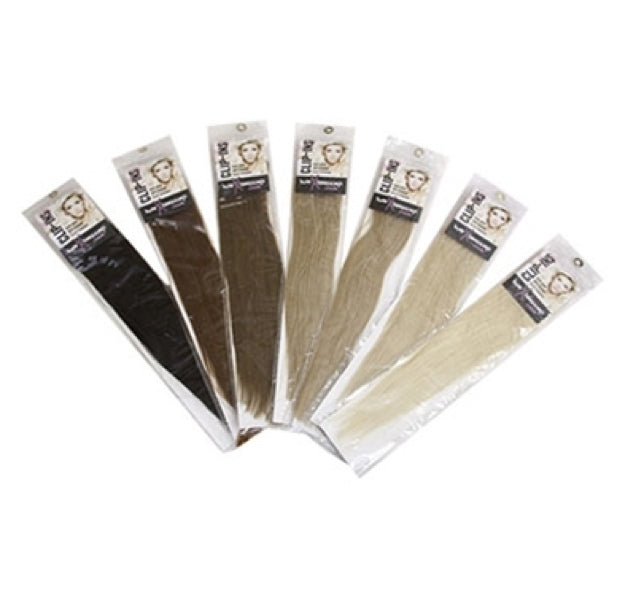
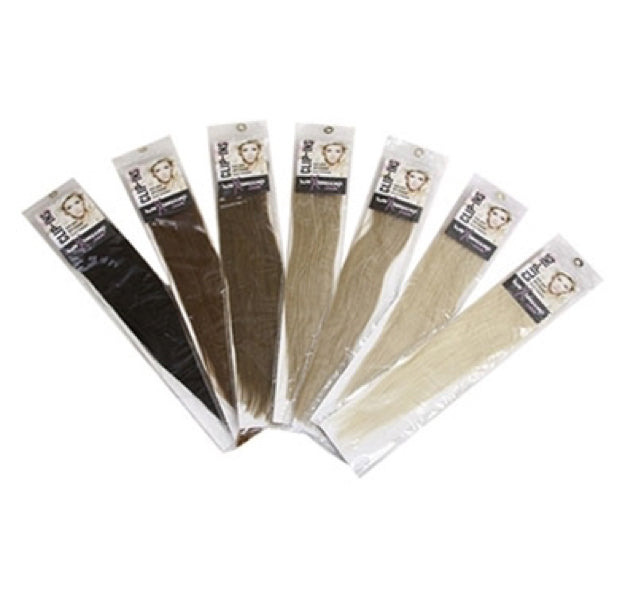
Are Clip-In Extensions an Option During Pregnancy?
Clip-Ins may appeal to people who want temporary length or volume without maintaining fitted extensions between appointments.
Because they are removable, they can be worn only when wanted.
However, Clip-Ins should still be fitted carefully and should not be clipped repeatedly onto fragile or thinning sections.
Are Clip-Ins Better During Pregnancy?
Not automatically.
The main advantage is that they are removable.
This gives more flexibility if the natural hair or scalp changes during pregnancy.
Can Pregnancy Make Extensions Feel Different?
Yes.
If the scalp becomes more sensitive or the natural hair texture changes, existing attachment areas may feel different than they did before pregnancy.
Persistent soreness, pulling or irritation should be checked by the fitting technician.
Can Pregnancy Affect Hair Extension Maintenance?
Potentially.
If natural hair growth, oiliness, density or shedding changes, the usual maintenance schedule may no longer be ideal.
Do not assume the exact same fitting plan will remain appropriate throughout pregnancy.
What Is Postpartum Hair Shedding?
Some people experience increased shedding in the months after giving birth.
This can happen as the hair growth cycle changes again after pregnancy.
The amount and duration can vary considerably.
Is Postpartum Hair Shedding Normal?
Increased shedding after pregnancy is commonly reported, but not every person experiences it in the same way.
If the shedding is severe, patchy, painful, associated with scalp changes or continues longer than expected, seek appropriate medical advice.
When Does Postpartum Shedding Start?
The timing varies.
Some people notice increased shedding several weeks or months after giving birth rather than immediately.
This is one reason why a person who appeared suitable for extensions during pregnancy may need reassessment afterwards.
Can You Wear Hair Extensions During Postpartum Shedding?
This requires extra caution.
If the natural hair is actively shedding more than usual, fitted extensions may add weight to hair that is already going through a significant change.
Professional assessment is especially important before fitting or refitting extensions during this period.
Should You Remove Extensions If Postpartum Shedding Starts?
Not automatically, but the extensions should be assessed.
If shedding has increased significantly, a technician should check:
- Natural hair density
- Attachment tension
- Root tangling
- Overall extension weight
- Whether continuing the fitting is appropriate
Do not simply ignore a major change in shedding.
Can Hair Extensions Make Postpartum Shedding Worse?
Postpartum shedding itself is related to the natural hair growth cycle, but fitted extensions add attachment points and weight to the existing hair.
This means extension suitability needs careful consideration while shedding is active.
Poor fitting, excessive weight or neglected maintenance may place additional stress on the natural hair.
Can Extensions Hide Postpartum Hair Loss?
Extensions may visually add length or volume, but they should not be treated as a treatment for postpartum hair loss.
If the natural hair is actively thinning or shedding heavily, adding fitted extensions may not be appropriate.
What About Temporary Extensions After Pregnancy?
Some people may prefer removable options such as Clip-Ins while waiting for their natural hair to stabilise.
Even then, clips should not be attached to very weak or sparse sections.
Can You Wear Clip-Ins with Postpartum Hair Shedding?
Potentially, but care is still needed.
If the hair is noticeably thinner around the temples, hairline or parting, avoid clipping heavy pieces into those areas.
If you are unsure, seek professional advice before regular wear.
What If Your Hair Feels Much Thinner After Pregnancy?
If the natural hair feels noticeably thinner than before pregnancy, do not automatically refit the same quantity or weight of extensions you previously wore.
Your technician should reassess the hair first.
Can You Use Lighter Extension Strands After Pregnancy?
In some cases, lighter individual strands may be considered where appropriate.
For example, 0.5g strands contain less extension hair than 1.0g strands.
However, using lighter strands does not automatically make extensions suitable for actively shedding or fragile hair.
0.5g vs 1.0g Extensions After Pregnancy
0.5g strands:
- Contain less hair per attachment
- Create a lower individual strand weight
- Allow more detailed placement
1.0g strands:
- Contain more hair per attachment
- Create more density per strand
- Require sufficient natural hair support
A technician should decide whether either option is appropriate.
Is Less Hair Better After Pregnancy?
Sometimes a lower total extension weight may be more appropriate, but this depends on the natural hair.
The goal should never be to fit a predetermined number of strands regardless of the current hair condition.
Can Extensions Be Added Only to Certain Areas?
Potentially.
Individual strand methods can allow targeted placement, but sparse or actively thinning areas should not automatically be loaded with extension weight simply because they look less dense.
What If Postpartum Hair Loss Is Around the Hairline?
The hairline and temple areas can be particularly delicate.
Avoid attaching unnecessary weight to visibly weak or sparse sections.
If the change is significant or concerning, seek appropriate medical advice.
Hair extensions should never be used as a substitute for investigating sudden, severe, patchy or unexplained hair loss.
When Should You Speak to a Healthcare Professional?
Seek appropriate advice if you experience:
- Severe or rapidly worsening shedding
- Patchy hair loss
- Visible scalp inflammation
- Persistent pain or itching
- Broken skin
- Hair loss that concerns you
A GP, dermatologist, pharmacist, midwife or another appropriate healthcare professional can advise depending on the situation.
Can Breastfeeding Affect Hair Extension Suitability?
Breastfeeding itself does not determine whether someone can wear extensions.
The important factors are still the condition, density and strength of the natural hair and scalp.
If hair shedding is increased, have the hair assessed before fitting or refitting extensions.
Should You Wait Until Postpartum Shedding Stops?
For some people, waiting until shedding has stabilised may be the more cautious option.
This is especially relevant if hair density has reduced noticeably.
A professional assessment can help determine whether fitting should be delayed.
Can Pregnancy Affect Your Scalp?
Some people experience changes in scalp sensitivity, dryness or oiliness during pregnancy.
If the scalp becomes sore, irritated or unusually sensitive, attachment methods may feel less comfortable.
What If Your Extensions Feel Too Tight During Pregnancy?
Contact your technician.
Do not tolerate persistent pain simply because the extensions were comfortable at the original fitting.
Changes in the scalp or natural hair may mean adjustment is needed.
What If Your Scalp Becomes Itchy?
Mild itching can have several causes, including dryness or product build-up.
However, persistent itching, redness, soreness or broken skin should be assessed appropriately.
Do not repeatedly apply oils or scalp treatments around extension attachments without understanding the cause.
Can You Use Tea Tree Shampoo During Pregnancy?
Product suitability depends on the individual formulation and your own sensitivity.
If you are pregnant and unsure whether a particular cosmetic product is suitable for you, check the manufacturer's guidance or speak to an appropriate healthcare professional.
👉 Read Our Tea Tree Shampoo & Hair Extensions Guide
How to Care for Hair Extensions During Pregnancy
The basic aftercare principles remain important:
- Brush gently
- Support attachment areas while brushing
- Keep roots properly detangled
- Use suitable shampoo and conditioner
- Dry fitted attachment areas thoroughly
- Use heat protection when styling
- Attend maintenance appointments
How to Wash Extensions During Pregnancy
Wash gently without aggressively rubbing the attachment areas.
Focus shampoo around the scalp and rinse thoroughly.
Apply conditioner mainly through the mid-lengths and ends.
Can Pregnancy Make Your Scalp Oilier?
Some people notice changes in oil production.
If the roots become oilier, you may need to adjust washing frequency.
With Tape-Ins and ring-based methods, avoid allowing heavy oily products to build up around the attachments.
Can Pregnancy Make Hair Drier?
It can for some people.
If the extension lengths feel dry, use suitable conditioner and occasional conditioning treatments through the mid-lengths and ends.
Can You Use Hair Masks During Pregnancy?
Many cosmetic hair masks are used routinely during pregnancy, but always check the specific product instructions and ingredients if you have concerns.
For extension care, keep rich treatments mainly through the mid-lengths and ends.
How to Brush Extensions When You Have a New Baby
After having a baby, routines can become much busier, so keeping aftercare simple helps.
Try to:
- Detangle once or twice during the day as needed
- Pay attention to the nape area
- Support the hair while brushing
- Keep attachment areas separated
👉 Read Our Hair Extension Brush & Comb Guide
Why the Nape Needs Extra Attention
The nape is particularly prone to tangling because of friction from clothing, movement and sleeping.
If you are tired or short on time after having a baby, this can be one of the first areas where tangling develops.
Can You Sleep with Fitted Extensions During Pregnancy?
Yes.
Fitted extensions remain in the hair overnight.
Before bed:
- Make sure the hair is dry
- Detangle gently
- Loosely secure the lengths
Should You Sleep with Wet Extensions?
No.
Wet hair is more prone to tangling, and damp attachment areas can become difficult to manage.
Can You Wear Extensions During Labour?
If you already wear fitted extensions, there is not usually a need to remove them simply because labour is approaching unless there is another reason to do so.
However, wearing the hair in a comfortable, low-tension style may be more practical.
Clip-Ins and other removable hairpieces are usually easier to remove beforehand.
Should You Have Maintenance Before Giving Birth?
If your maintenance appointment is due around the expected birth period, it may be useful to plan it in advance.
This can reduce the chance of the attachments becoming excessively grown out during a busy period.
What If You Cannot Attend Maintenance After Giving Birth?
If you know appointments may be difficult, discuss this with your technician beforehand.
Fitted extensions should not simply be left far beyond their recommended maintenance period.
Could Clip-Ins Be Easier with a Newborn?
Possibly.
Clip-Ins offer flexibility because they can be worn occasionally rather than maintained continuously.
However, they still need brushing, storage and careful application.
Can You Wear a Clip-In Ponytail After Pregnancy?
Potentially, provided the natural ponytail is strong enough to support the attachment.
Avoid adding significant weight if the hair is actively shedding or feels noticeably weaker.
Can You Wear a Clip-In Fringe After Pregnancy?
Yes, where the hair around the front is strong enough to support the clips.
If postpartum thinning is concentrated around the hairline or temples, use extra caution.
Can Hair Extensions Help Confidence After Pregnancy?
Some people enjoy using extensions because they like the appearance of extra length or volume.
However, cosmetic extensions should remain a styling choice rather than being presented as a treatment for postpartum hair changes.
Can Hair Extensions Make Hair Grow?
No.
Extensions add cosmetic length and volume but do not make the natural hair grow faster.
Do Hair Extensions Strengthen Natural Hair?
No.
Extensions do not strengthen the natural hair.
The natural hair must be strong enough to support the extensions.
Can Extensions Stop Postpartum Hair Loss?
No.
Hair extensions do not prevent or treat postpartum shedding.
Can Vitamins Stop Postpartum Shedding?
Do not start supplements specifically for hair loss without appropriate advice, particularly during pregnancy or breastfeeding.
If you are concerned about shedding or possible nutritional deficiencies, speak to an appropriate healthcare professional.
Can You Colour Extensions During Pregnancy?
Extension hair can react unpredictably to chemical colour, regardless of pregnancy.
Where possible, choose the closest extension shade before fitting rather than relying on chemical processing afterwards.
If you have questions about using hair colour products during pregnancy, follow the product instructions and seek appropriate professional advice where needed.
Can You Use Heat Styling During Pregnancy?
Heat styling the hair itself is generally a cosmetic choice, but extension hair should still be protected from unnecessary high temperatures.
Use suitable heat protection and avoid repeatedly overheating the lengths.
What If Extensions Start Slipping After Pregnancy?
Increased shedding, changes in oil production and changes in natural hair density can affect fitted extensions.
If you notice excessive slipping:
- Do not tighten rings yourself
- Do not add glue
- Do not ignore widespread movement
- Contact your technician
What If You See More Shed Hair at Maintenance?
Some naturally shed hair remains trapped around extension attachments until maintenance.
If overall shedding has increased postpartum, this may appear more noticeable.
A technician should assess whether the amount is consistent with normal shedding or whether the fitting should be reconsidered.
When Should You Pause Hair Extensions?
It may be sensible to delay or pause fitted extensions if:
- Hair is actively shedding heavily
- Density has reduced noticeably
- Hair is breaking
- The scalp is sore or inflamed
- Attachments cannot be supported properly
When Can You Consider Extensions Again?
Once the natural hair and shedding pattern have stabilised, a professional consultation can reassess suitability.
Do not assume the same method, strand weight or quantity used before pregnancy will still be appropriate.
Hair Extension Consultation After Pregnancy
A good consultation should consider:
- Current hair density
- Current shedding
- Hair strength
- Scalp condition
- Desired result
- Suitable extension weight
- Whether fitted or removable extensions are more appropriate
Which Hair Extension Method Is Best After Pregnancy?
There is no single best method.
The correct choice depends on the condition of the natural hair at the time of fitting.
👉 Read Our Guide to Choosing the Best Hair Extensions for Your Hair Type
Hair Extension Aftercare During & After Pregnancy
Whatever method you wear, gentle brushing, suitable washing, thorough drying and professional maintenance remain important.
👉 Read Our Complete Hair Extension Aftercare Guide
Final Thoughts
Pregnancy and the postpartum period can both change the way natural hair behaves.
For some people, continuing to wear extensions may be straightforward. For others, increased shedding, reduced density or scalp sensitivity may mean the fitting needs to be adjusted or temporarily paused.
The most important rule is simple: base the extension method and weight on the hair you have now, rather than automatically repeating the fitting you wore before pregnancy.
If hair loss or scalp changes are severe, persistent or concerning, seek appropriate healthcare advice before using extensions to disguise the problem.