


Which Hair Extensions Are Best for Your Hair Type? Complete Method & Suitability Guide
Choosing the right hair extension method is not just about picking the most popular option.
The best choice depends on your natural hair density, strength, length, condition, lifestyle and the result you want to achieve.
Some methods are better suited to detailed strand placement, some add broader density, some are removable, and some require more maintenance than others.
This guide explains how different extension methods compare and what factors should be considered before deciding between Nano-Tips, I-Tips, Micro-Loops, Tape-Ins, hair wefts, Nail-Tips and Clip-Ins.
Want temporary extensions? Clip-Ins may be the simplest option.
Want individual strand placement? Nano-Tips, I-Tips or Micro-Loops may be worth considering.
Want broader density? Tape-Ins or hair wefts may be useful.
Want bonded extensions? Nail-Tip / U-Tip extensions are one option.
Have fine or fragile hair? Professional assessment is especially important.
Is There One Best Hair Extension Method?
No.
There is no single extension method that is automatically best for everyone.
The right choice depends on several factors, including:
- Natural hair density
- Hair strength
- Hair condition
- Current hair length
- Desired extension length
- Desired volume
- Lifestyle
- Maintenance commitment
- How visible attachment areas may be
What Hair Extensions Are Best for Fine Hair?
Fine hair needs careful assessment because lower density can make attachment areas easier to see and may limit the amount of weight the natural hair can comfortably support.
Possible options may include:
- 0.5g Nano-Tips
- Lighter I-Tip strands
- Carefully placed Tape-Ins
- Lightweight Clip-Ins for occasional wear
However, none of these methods is automatically suitable for every person with fine hair.
A technician should assess:
- Hair strength
- Density
- Section size
- Attachment weight
- Whether the extensions can be concealed properly
Fine hair does not always mean weak hair, and thick hair does not always mean strong hair. Hair condition matters just as much as density.
What Hair Extensions Are Best for Thick Hair?
Thicker natural hair often needs enough extension density to create a balanced result through the lengths and ends.
Possible options may include:
- Hair wefts
- LA Weave systems
- Tape-Ins
- 1.0g Nano-Tips
- 1.0g I-Tips
The right option depends on how much length and volume is required and whether the natural hair can support the chosen method.
What Hair Extensions Are Best for Short Hair?
Short hair can be more challenging to blend because the natural ends may sit well above the extension lengths.
The key considerations are:
- Enough natural length to conceal attachments
- Sufficient extension density
- Strategic placement
- Professional cutting and blending
Nano-Tips, I-Tips, Tape-Ins and wefts can all work in suitable cases, but very short hair may not provide enough coverage for some methods.
What Hair Extensions Are Best for Long Hair?
Long natural hair may require less blending than short hair, especially if the goal is mainly to add volume.
Possible methods include:
- Nano-Tips
- I-Tips
- Micro-Loops
- Tape-Ins
- Hair wefts
- Clip-Ins
The best method depends on how much extra density or length is required.
What Hair Extensions Are Best for Volume?
If the goal is mainly to create fuller-looking hair rather than dramatic length, several methods can work.
Popular volume-focused options include:
- Hair wefts
- Tape-Ins
- Nano-Tips
- I-Tips
- Clip-Ins
The choice depends on whether you want temporary or permanently fitted extensions.
What Hair Extensions Are Best for Length?
Most extension methods can add length, but the amount of hair required will depend on the starting length and density.
For significant length changes, enough extension density is important to avoid a visible gap between the natural hair and the extensions.
Temporary vs Fitted Hair Extensions
One of the biggest decisions is whether you want extensions you can remove yourself or extensions that remain in place between maintenance appointments.
Temporary methods:
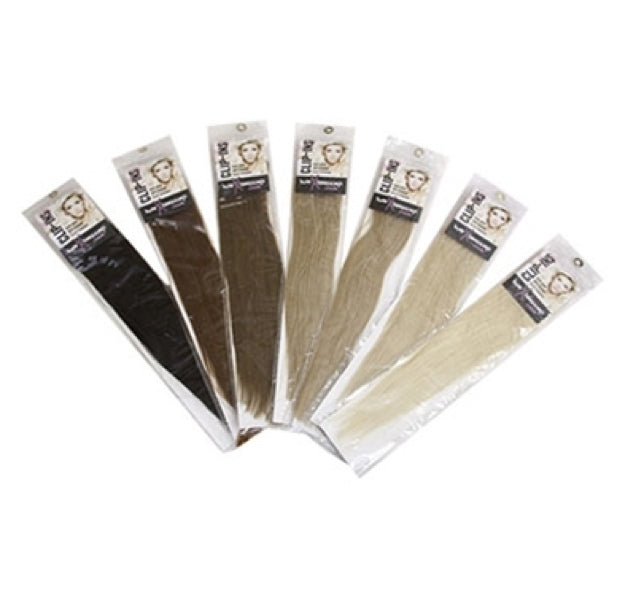
- Clip-In Hair Extensions
- Clip-In Ponytails
- Clip-In Fringes
Professionally fitted methods:
- Nano-Tips
- I-Tips / Stick-Tips
- Micro-Loops
- Tape-Ins
- Hair Wefts
- Nail-Tips / U-Tips
Who Might Prefer Clip-In Hair Extensions?
Clip-Ins may appeal to someone who wants:
- Occasional length or volume
- A removable option
- No salon fitting appointment
- Extensions for events or weekends
- More control over when the extensions are worn
They should still be applied and removed carefully.
Are Clip-Ins Good for Fine Hair?
They can be for some people, but clip weight and placement matter.
Large or heavy wefts clipped repeatedly into the same fine sections may create unnecessary pulling.
Use appropriate pieces and remove them before sleeping.
Who Might Prefer Nano-Tip Hair Extensions?
Nano-Tips may appeal to someone who wants:
- Individual strand placement
- Small attachment points
- Detailed colour blending
- Added length and volume
They are professionally fitted using Nano Rings.
Are Nano Extensions Good for Fine Hair?
They may be suitable for some finer hair types, particularly where lighter 0.5g strands are appropriate.
However, the natural hair must still be strong enough to support the attachments.
Who Might Prefer I-Tip / Stick-Tip Extensions?
I-Tips may suit someone looking for:
- Individual strand placement
- Micro Ring fitting
- No heat during the core attachment process
- Detailed colour placement
What Is the Difference Between I-Tips and Nano-Tips?
I-Tips usually use larger Micro Rings, while Nano-Tips use smaller Nano Rings.
Both are individual strand methods.
The best option depends on the natural hair and the amount of concealment required.
Who Might Prefer Micro-Loop Extensions?
Micro-Loops may appeal to clients who want an individual strand method with the ring and guiding loop already attached to each strand.
They provide a similar general outcome to I-Tips but use a different application system.
Who Might Prefer Tape-In Hair Extensions?
Tape-Ins may be useful for someone wanting:
- Broad sections of added hair
- Extra volume
- Multi-tonal colour placement
- A flat attachment style
They use adhesive panels rather than rings.
Are Tape-Ins Good for Fine Hair?
They may be suitable for some people with fine hair, but panel weight, placement and concealment need careful consideration.
They are not automatically suitable for every fine-haired client.
Who Might Prefer Hair Wefts?
Hair wefts may be useful when the goal is to add a larger amount of hair across wider sections.
They can be effective for:
- Broad volume
- Fuller ends
- Significant density
- Longer transformations
Are Wefts Best for Thick Hair?
Wefts can work particularly well with thicker hair, but they are not limited to thick hair.
Suitability depends on the weight of the weft, row placement and natural hair strength.
What Is an LA Weave?
An LA Weave is a ring-supported weft method.
Small rings or beads create a foundation, and a hair weft is secured across the row.
This can add significant density through the back and sides.
Who Might Prefer Nail-Tip / U-Tip Extensions?
Nail-Tips are individual pre-bonded strands.
They use keratin bonds that are softened during professional application using a heat connector.
They may appeal to clients who prefer a bonded strand method rather than rings, tape or wefts.
Nano-Tips vs Tape-Ins
Nano-Tips:
- Individual strands
- Nano Ring attachment
- Detailed placement
Tape-Ins:
- Flat adhesive panels
- Add hair across wider sections
- Different maintenance and removal process
Nano-Tips vs Hair Wefts
Nano-Tips provide detailed strand-by-strand placement.
Wefts provide broader density across fitted rows.
Some professional fittings combine both methods as a hybrid system.
Tape-Ins vs Hair Wefts
Tape-Ins use multiple adhesive panels distributed throughout selected areas.
Hair wefts use larger curtains of extension hair fitted across rows.
Both can add substantial volume, but their attachment systems are very different.
I-Tips vs Micro-Loops
I-Tips use separate Micro Rings during application.
Micro-Loops come with the ring and guiding loop already attached.
Both are ring-based strand methods.
I-Tips vs Nano-Tips
Both are strand-by-strand ring methods.
The main difference is the size and style of the attachment system.
0.5g vs 1.0g Hair Extension Strands
Strand weight can have a major effect on suitability.
0.5g strands:
- Contain less hair per attachment
- Allow more detailed placement
- May suit situations where a lighter strand is preferred
1.0g strands:
- Contain more hair per attachment
- Add more density per strand
- Require sufficient natural hair support
Neither is automatically better.
How Much Extension Hair Do You Need?
The amount depends on:
- Natural hair density
- Starting length
- Desired length
- Desired volume
- Extension method
- Individual strand or panel weight
There is no universal number of strands, grams or packs that suits everyone.
Is More Hair Always Better?
No.
Adding too much weight can make the fitting unsuitable for the natural hair.
The aim should be the right amount of extension hair, not the maximum possible amount.
What Hair Extensions Are Best for Fragile Hair?
Fragile hair needs especially careful assessment.
In some cases, fitted extensions may not be appropriate at all until the hair condition improves.
Do not assume that choosing a smaller ring or lighter strand automatically makes a method suitable.
What Hair Extensions Are Best for Thinning Hair?
Active thinning requires caution.
Extensions should not be treated as a solution for medical hair loss or unexplained thinning.
If thinning is significant or worsening, appropriate professional or medical advice should be sought before fitting extensions.
What Hair Extensions Are Best for Damaged Hair?
If the natural hair is heavily damaged, weak or breaking, adding extension weight may not be appropriate.
A professional assessment should determine whether fitting should be delayed.
What Hair Extensions Are Best for Coloured Hair?
Most extension methods can be used with coloured hair where the natural hair is in suitable condition.
The key is accurate shade matching.
Multi-tonal extensions may be useful where the natural hair contains several colours.
What Hair Extensions Are Best for Blonde Hair?
Method choice is not determined by hair colour alone.
For blonde hair, focus on:
- Correct shade matching
- Natural hair strength
- Density
- Attachment concealment
What Hair Extensions Are Best for Brunette Hair?
Most methods are suitable for brunette shades where the natural hair is appropriate.
Brunette hair often benefits from blending more than one shade for extra dimension.
What Hair Extensions Are Best for Black Hair?
Again, method choice depends more on density and condition than colour.
Accurate matching between Jet Black, Off Black and darker brunette shades is important.
What Hair Extensions Are Best for Red or Copper Hair?
Any suitable extension method can work.
The main challenge is often colour matching because natural red and copper hair can contain multiple undertones.
What Hair Extensions Are Best for Highlighted Hair?
Individual strand methods such as Nano-Tips and I-Tips can be useful for detailed colour placement.
Tape-Ins and wefts can also be blended using multiple shades.
What Hair Extensions Are Best for Balayage Hair?
Multi-tonal colour blending is more important than the extension method itself.
Using darker and lighter shades together can help recreate a balayage-style transition.
Which Extensions Are Best for an Active Lifestyle?
Most fitted methods can work with an active lifestyle, but aftercare becomes important.
Consider:
- How often you exercise
- How much you sweat
- Swimming frequency
- How often you wash your hair
Clip-Ins may be easier for people who prefer to remove extensions before exercise.
Which Extensions Are Best if You Swim Regularly?
Swimming creates extra aftercare requirements for fitted extensions.
Chlorine, salt water and prolonged moisture can affect extension hair.
If swimming is a major part of your routine, discuss this with your technician before choosing a method.
Which Extensions Are Best for Low Maintenance?
No professionally fitted extension method is completely maintenance-free.
If you want maximum flexibility and no salon move-up appointments, removable Clip-Ins may suit your lifestyle better.
Which Extensions Need the Most Maintenance?
Maintenance depends on the method and natural hair growth.
Ring-based methods, Tape-Ins and wefts all require professional maintenance as the natural hair grows.
Do Hair Extensions Damage Natural Hair?
No method can be described as universally damage-free.
The risk depends on:
- Natural hair condition
- Extension weight
- Correct fitting
- Maintenance
- Removal
- Aftercare
Which Hair Extensions Are Most Discreet?
Attachment visibility depends on:
- Hair density
- Placement
- Method
- Attachment size
- Hairstyle
Nano Rings are smaller than Micro Rings, but smaller does not automatically mean the method is suitable for every client.
Which Extensions Are Best for Updos?
Placement is particularly important if the client frequently wears high ponytails or updos.
The technician needs to plan attachment positions so they can remain concealed in the intended hairstyles.
Which Extensions Are Best for Wearing Hair Down?
Most methods can work well where the hair is mainly worn down.
Concealment is generally easier when more natural hair covers the attachment areas.
How Long Should Your Hair Be for Extensions?
There is no single minimum length that applies to every method.
The natural hair needs to be long enough to conceal the attachments and blend with the extension lengths.
👉 Read Our Hair Extension Length Guide
Should You Choose 14, 18, 20 or 22-Inch Extensions?
Your ideal length depends on:
- Current hair length
- Height
- Desired result
- How much extension density is available for blending
Does Your Height Affect Extension Length?
Yes.
The same 20-inch extension can fall at a different point on someone shorter compared with someone taller.
How Important Is Colour Matching?
Very important.
A good extension fitting can still look obvious if the colour does not blend correctly.
Compare:
- Roots
- Mid-lengths
- Ends
- Undertones
- Highlights
👉 View the HairXtensions Hair Extension Colour Chart
Should Hair Extensions Match the Roots or Ends?
For most lengthening applications, the mid-lengths and ends are especially important because this is where the extension hair needs to blend visually.
Highly multi-tonal hair may require more than one shade.
Can You Mix Extension Methods?
Yes.
Some professional fittings combine methods to create a hybrid system.
For example, a hair weft may provide broader density while Nano-Tips are used around selected areas for more precise placement.
Are Hybrid Hair Extensions Better?
Not automatically.
A hybrid fitting should only be used where combining methods provides a clear benefit for the client's natural hair or desired result.
How Do You Choose Between Nano-Tips, I-Tips, Tape-Ins and Wefts?
Think about the type of result you want.
Nano-Tips: detailed individual strand placement with small rings.
I-Tips: individual Micro Ring strands.
Tape-Ins: flat panels that add hair across wider sections.
Hair Wefts: larger curtains of hair fitted across rows.
Then consider whether the natural hair can support the chosen method.
How Important Is Professional Fitting?
Very important for salon-applied methods.
A professional needs to understand:
- Hair assessment
- Sectioning
- Weight distribution
- Attachment placement
- Tension
- Blending
- Maintenance
- Safe removal
How Important Is Maintenance?
Maintenance is essential for fitted extensions.
As natural hair grows, attachment areas move further from the scalp and need professional attention.
How Important Is Aftercare?
Aftercare affects both the extension hair and the attachment areas.
Good routines include:
- Gentle brushing
- Correct washing
- Appropriate conditioning
- Proper drying
- Heat protection
- Professional maintenance
Which Method Is Best if You Do Not Want Heat?
Ring-based methods such as Nano-Tips, I-Tips and Micro-Loops do not require heat for the core attachment process.
Tape-Ins and wefts also use different attachment systems.
Which Method Is Best if You Do Not Want Adhesive?
Ring-based methods and many weft systems do not use traditional adhesive.
Tape-Ins use adhesive panels.
Which Method Is Best if You Do Not Want Rings?
Possible alternatives include:
- Tape-Ins
- Nail-Tip / U-Tip extensions
- Some weft systems
- Clip-Ins
Which Extensions Are Easiest to Remove?
Clip-Ins are the easiest because they are designed for home removal.
Professionally fitted methods should generally be removed using the appropriate professional technique.
Can You Remove Fitted Extensions Yourself?
Professional removal is recommended for Nano-Tips, I-Tips, Micro-Loops, Tape-Ins, wefts and Nail-Tips.
Incorrect removal can create unnecessary pulling, tangling or breakage.
Are Human Hair Extensions Better Than Synthetic?
Human hair generally offers more styling flexibility because it can typically be heat styled and blended more naturally with human hair.
However, product quality and aftercare still vary.
Can Human Hair Extensions Be Coloured?
Chemically colouring extension hair can give unpredictable results.
Lightening or bleaching previously processed extension hair can be particularly difficult.
Where possible, choose the closest available shade before fitting.
How Long Do Hair Extensions Last?
There is no universal lifespan.
Longevity depends on:
- Extension quality
- Method
- Heat styling
- Washing
- Maintenance
- Aftercare
- How frequently removable extensions are worn
How to Choose the Best Hair Extensions for You
1. Do I want temporary or fitted extensions?
2. Is my natural hair fine, medium or thick?
3. Is my hair strong enough to support extensions?
4. Do I mainly want length, volume or both?
5. How much maintenance am I prepared to do?
6. How do I normally wear my hair?
7. Do I exercise or swim frequently?
8. Which attachment methods am I comfortable with?
Which Hair Extension Method Is Right for You?
The best extension method is the one that suits both your natural hair and your lifestyle.
Do not choose purely because one method is fashionable or because someone else's transformation looked good.
A fitting that works perfectly for one person may be completely unsuitable for another.
Professional Consultation Before Hair Extensions
Before professionally fitted extensions, a consultation should assess:
- Natural hair strength
- Density
- Current condition
- Scalp condition
- Desired result
- Appropriate extension weight
- Suitable attachment method
Explore Different Hair Extension Methods
If you want to understand how each fitting method works in more detail, read our dedicated method comparison guide.
👉 Compare Different Hair Extension Methods
Hair Extension Fitting & Removal Guides
Explore professional fitting and removal information for Nano-Tips, I-Tips, Micro-Loops, Tape-Ins and other extension methods.
👉 View Hair Extension Fitting & Removal Guides
Shop Hair Extensions
Explore the HairXtensions range of professional and removable human hair extensions, including Nano-Tips, I-Tips, Micro-Loops, Tape-Ins, Wefts and Clip-Ins.
Hair Extension Aftercare
Whatever method you choose, correct washing, brushing, drying, styling and maintenance all help keep extensions manageable and attachment areas properly maintained.