

Hair breakage can affect both your natural hair and the hair extensions you're wearing, but the causes are not always the same.
Natural hair can become vulnerable to breakage when it is exposed to excessive tension, repeated pulling, chemical processing, aggressive brushing or inappropriate extension weight. Extension hair itself can also become dry and weakened through repeated heat styling, rough handling, chemical processing and everyday wear.
Properly selected and professionally fitted extensions should take the condition, density and strength of the natural hair into account rather than relying on a one-size-fits-all fitting.
This guide explains how to help protect your natural hair while wearing extensions, how to reduce breakage through the extension lengths and what warning signs should not be ignored.
Quick answer: To help reduce breakage while wearing hair extensions, make sure the fitting method and extension weight are suitable for your natural hair, avoid excessive tension, brush gently, keep up with maintenance, minimise unnecessary heat and chemical processing and deal with tangles before they develop into severe matting.
Hair Breakage vs Natural Shedding: What's the Difference?
Hair coming away does not automatically mean that your natural hair is snapping.
Your natural hair goes through a normal growth and shedding cycle. With professionally fitted extensions, some naturally released hairs can remain held within or around the attachment until maintenance or removal.
This can make the amount of loose hair seen during removal appear greater than expected.
Natural Shedding
Naturally released hairs may remain trapped within fitted extension sections until the extensions are maintained or removed.
Breakage
Breakage involves the hair shaft snapping rather than the complete hair simply being released as part of its normal growth cycle.
If you are noticing obvious thinning, short broken areas or a significant change in the density of your natural hair, don't automatically assume it is ordinary extension shedding. Have the hair and fitting assessed.
What Can Cause Hair Breakage While Wearing Extensions?
Excessive Tension
Attachment points or hairstyles that pull too strongly against the natural hair can place unnecessary stress on individual sections.
Too Much Extension Weight
The amount and weight of hair fitted should be appropriate for the client's natural hair density, strength and condition.
Sections That Are Too Small
A small amount of natural hair should not be expected to support an inappropriate amount of extension weight.
Aggressive Brushing
Pulling a brush through knots can place unnecessary force on natural hair and fitted attachment points.
Matting
Severe tangling around fitted sections can create additional pulling when the hair moves or when someone tries to detangle it.
Excessive Heat
Repeated high-temperature styling can contribute to dryness and weakening of both natural and extension hair.
Chemical Processing
Repeated bleaching, colouring, perming or other chemical services can affect the strength and condition of natural hair.
Maintenance Overdue
As fitted extensions grow down, attachment points require appropriate maintenance rather than being left indefinitely.
Can Hair Extensions Cause Breakage if They're Too Tight?
Excessive tension is something that should be taken seriously.
A fitted extension needs to be secure, but secure does not mean painfully tight. The natural hair should be able to move comfortably without individual attachments constantly pulling against the scalp or hairline.
Have the Fitting Checked if You Notice:
- Persistent pulling or significant discomfort
- One attachment feeling much tighter than surrounding extensions
- Pain when moving the hair normally
- Natural hairs pulling across neighbouring sections
- Very small natural sections supporting comparatively heavy extensions
- Visible thinning around repeatedly stressed areas
Don't simply wait for a painful fitting to “loosen up”. If an attachment appears to be creating excessive tension, ask the extensionist who fitted the hair to assess it.
Can Hair Extensions Be Too Heavy for Natural Hair?
The amount of hair fitted should be appropriate for the natural hair that is supporting it.
A client with strong, dense natural hair may be suitable for a different amount or strand weight than somebody with finer or lower-density hair.
This is why extension method, strand weight, section size and total amount fitted should be assessed together rather than simply fitting the maximum amount of extension hair possible.
More hair is not automatically better. A successful fitting should balance the desired result with what the client's natural hair can comfortably support.
Does Hair Extension Method Matter?
Different extension methods distribute their weight and attachment points differently, so no single method is automatically the best choice for every head of hair.
Individual keratin attachments should use an appropriate natural hair section for each extension strand.
Ring size, section size, placement and extension weight all need to work together.
Small Nano Ring attachments still require suitable natural hair sections and professional fitting.
Individual pre-looped strands should be positioned without placing unnecessary tension on the natural hair.
Tape panels should be positioned using suitable natural hair sections rather than attaching excessive weight to insufficient hair.
The fitted track and total weft weight should be appropriate for the natural hair and fitting technique.
Compare the different systems in our Hair Extension Methods Guide .
6 Steps for Brushing Extensions More Gently
Good brushing is about removing tangles without repeatedly pulling against the natural hair or fitted attachments.
Use a Suitable Extension Brush
Choose a brush or comb that allows you to work through extension hair without repeatedly catching fitted attachment points.
Divide Long Hair Into Sections
Working with manageable sections gives you more control when detangling longer extensions.
Start at the Ends
Remove tangles gradually from the ends rather than dragging them downwards from the roots.
Work Upwards Gradually
Once the ends are clear, continue through the mid-lengths and move upwards in controlled sections.
Support Fitted Attachments
Hold the hair close to fitted attachment areas while brushing through the lengths to reduce unnecessary pulling.
Never Force a Knot
If a tangle will not release easily, isolate it and work through it gradually rather than repeatedly pulling harder.
Can Matted Hair Increase the Risk of Breakage?
Severe tangling can place additional tension on the hair, particularly when several fitted sections become joined together around the roots.
Trying to force apart compact matting with aggressive brushing can make the problem worse.
Help prevent root matting by:
- Brushing regularly
- Keeping fitted sections separated
- Drying extensions thoroughly
- Never sleeping with wet fitted extensions
- Attending regular maintenance
- Dealing with small tangles early
Can Heat Styling Cause Hair Extension Breakage?
Repeated heat styling can contribute to extension hair becoming dry, brittle-feeling and more difficult to manage.
Human hair extensions can be curled, straightened and blow-dried, but sensible heat styling is important.
Do
- Use suitable thermal protection
- Make sure hair is dry before straightening or curling
- Use the lowest effective heat
- Work in manageable sections
- Limit repeated passes over the same hair
Avoid
- Automatically using maximum temperature
- Repeatedly straightening the same section
- Applying concentrated heat directly to bonds
- Clamping heat directly over Tape-In adhesive
- Using heated tools on tangled hair
Can Bleaching or Colouring Cause Hair Breakage?
Chemical processing can affect the strength, texture and condition of human hair.
If your natural hair is already weakened through repeated bleaching, colouring, relaxing or other chemical treatments, this should be considered before additional extension weight is fitted.
We also advise against bleaching, lightening, colouring or toning our hair extensions after purchase. Extension hair has already undergone processing to achieve its finished shade, and further chemical processing can produce unpredictable results.
If you need a different extension shade, choose your closest colour before fitting rather than planning to bleach or chemically alter the extension hair afterwards.
Can Dry Hair Extensions Break More Easily?
Extension hair that has become very dry can feel rough, brittle and harder to detangle.
If your extensions are becoming noticeably dry, review your washing, conditioning, heat styling, swimming and product routine before the hair becomes increasingly difficult to manage.
Aftercare may improve softness and manageability, but severely heat-damaged or chemically processed extension hair may not return to its original condition.
Read Our Dry Hair Extensions GuideHow Can You Protect Hair Extensions While Sleeping?
Friction, tangling and sleeping with damp fitted extensions can make the hair more difficult to manage the following morning.
Before bed:
- Make sure fitted extensions are completely dry.
- Gently brush through the lengths.
- Check individual fitted sections remain separated.
- Secure longer hair in a comfortable loose plait or low ponytail.
- Avoid very tight overnight hairstyles.
Can Oils & Conditioner Prevent Hair Breakage?
Conditioning products can help keep extension lengths softer and easier to manage, but more product is not automatically better.
You do not need to soak your extensions in large quantities of oil to keep them healthy.
Mid-Lengths & Ends
Use suitable conditioner, oils or treatments in appropriate amounts to maintain softness and manageability.
Attachment Areas
Keep oils, heavy conditioner and rich treatments away from fitted bonds, tapes and ring attachment areas.
Applying excessive oil cannot correct a fitting that is placing too much tension on the natural hair. Fitting problems need to be professionally assessed rather than disguised with aftercare products.
Why Hair Extension Maintenance Helps Protect Natural Hair
Professionally fitted extensions move further away from the scalp as the natural hair grows.
Maintenance allows the attachment areas, natural hair sections and general condition of the fitting to be checked rather than leaving increasingly grown-out extensions unmanaged.
Follow the maintenance schedule recommended by the extensionist for your particular fitting method.
Don't wait until the extensions are severely grown out, matted or repeatedly pulling before arranging maintenance.
Can Incorrect Hair Extension Removal Cause Breakage?
Removal is just as important as fitting.
Professionally fitted attachments should be removed using the correct tools and technique for that extension method rather than being pulled, cut or forced from the natural hair.
- Use the correct removal method for the extension system.
- Do not pull fitted extensions from the hair.
- Work gently through natural shed hairs after attachments are removed.
- Do not aggressively brush through compact root tangling.
- Seek professional help if attachments or matting are difficult to remove.
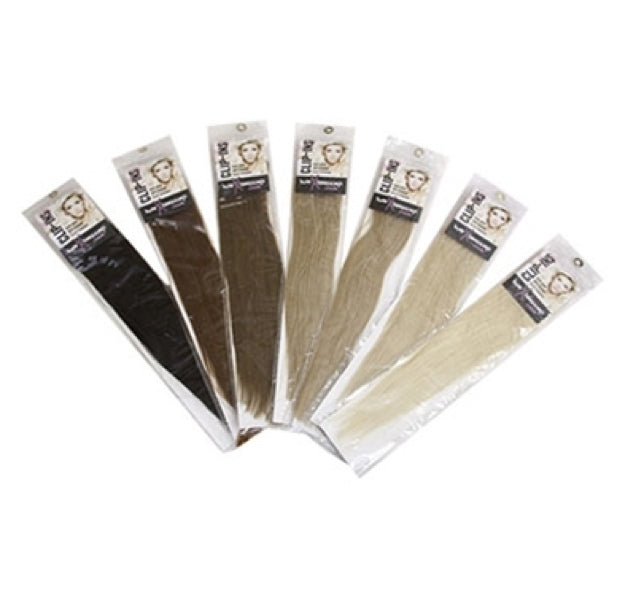
Can Clip-In Extensions Cause Natural Hair Breakage?
Clip-In extensions are removable, but they still need to be positioned and removed carefully.
Avoid repeatedly clipping heavy pieces onto very small or fragile sections of natural hair, and never pull the clips through the hair when removing them.
- Open each clip fully before removal.
- Support your natural hair while releasing the extension.
- Do not sleep in Clip-In extensions.
- Remove them before showering or swimming.
- Rotate placement where appropriate rather than stressing exactly the same area.
10 Ways to Help Prevent Hair Breakage With Extensions
Protecting your natural hair starts before the extensions are fitted and continues throughout wear and removal.
Assess the Natural Hair First
The extension method and amount fitted should be suitable for the condition and density of the natural hair.
Avoid Excessive Tension
Extensions should feel secure without painfully pulling against the scalp or natural hair.
Use Appropriate Extension Weight
Don't overload fine or fragile natural hair simply to create additional volume.
Brush Gently
Start at the ends, work upwards and support fitted attachment points.
Control Heat Styling
Use thermal protection and the lowest effective temperature rather than maximum heat.
Avoid Unnecessary Chemical Processing
Consider the condition of chemically processed natural hair before fitting additional extension weight.
Prevent Matting
Keep fitted sections separated and deal with small tangles before they become severe.
Never Sleep With Wet Fitted Extensions
Dry both the lengths and attachment areas completely before going to bed.
Keep Up With Maintenance
Follow the schedule recommended for your particular fitting method.
Remove Extensions Correctly
Use the correct professional removal technique rather than pulling or forcing attachments from the natural hair.
When Should Hair Breakage Be Investigated?
Not every change in your natural hair is necessarily caused by your extensions. Hair thinning and hair loss can have many different causes.
Have your extension fitting assessed if you notice:
- Persistent or painful tension
- Visible breakage around particular attachment areas
- Noticeable thinning where extensions are repeatedly fitted
- Hairline areas becoming increasingly sparse
- Attachments pulling on very small natural hair sections
- Severe matting close to the scalp
If you experience unexplained, sudden, patchy or significant natural hair loss, or you are concerned about the health of your scalp or hair, seek appropriate medical advice rather than assuming extensions are the cause.
Protect Your Hair With Consistent Extension Aftercare
Gentle brushing, suitable conditioning, careful heat styling and correct maintenance can all help keep both your natural hair and extension hair easier to manage throughout wear.
Shop Hair Extension Aftercare Shop Extension Brushes Read Our Aftercare GuideRelated Hair Extension Guides
Hair Breakage & Extensions – FAQs
Can hair extensions cause natural hair to break?
Extensions can place unnecessary stress on natural hair if they are too heavy, excessively tight, poorly fitted or repeatedly pulled during wear. The fitting method, weight and section size should be appropriate for the client's natural hair.
How can I tell if my hair is breaking or naturally shedding?
Natural shedding and hair-shaft breakage are different processes. Naturally shed hairs can remain trapped around fitted attachments until maintenance or removal. If you notice obvious short broken areas, significant thinning or a major change in density, have the hair assessed.
Can extensions be too heavy for fine hair?
The extension weight and amount fitted need to suit the density, strength and condition of the client's natural hair. More extension hair is not automatically better.
Can Micro Rings or Nano Rings cause breakage?
Ring-based methods should use suitable ring sizes, natural hair sections and extension weights. Poor sectioning, excessive tension or unsuitable fitting can place unnecessary stress on natural hair.
Can Tape-In extensions cause breakage?
Tape-In extensions should be fitted using appropriate natural hair sections and should not create excessive tension. Correct fitting, aftercare, maintenance and removal are important.
Can heat make hair extensions snap?
Repeated excessive heat can contribute to dryness and weakening of human hair. Use thermal protection, the lowest effective temperature and avoid repeatedly passing hot tools over the same section.
Should I put coconut oil on extensions to stop breakage?
There is no need to saturate extensions with large amounts of coconut oil. Use suitable extension aftercare in appropriate amounts and keep oils away from fitted bonds, tapes and ring attachment areas.
Can sleeping with wet extensions contribute to damage?
Wet fitted extensions can tangle more easily during overnight movement. Make sure the extension hair and attachment areas are completely dry before sleeping.
Can incorrect removal damage natural hair?
Fitted attachments should be removed using the correct tools and technique for the extension system. Avoid pulling, cutting or forcing extensions from the natural hair.
When should I get professional advice about hair breakage?
Have the fitting checked if you notice persistent tension, visible breakage around attachment points or increasing thinning. Seek appropriate medical advice for unexplained, sudden, patchy or significant natural hair loss.
Protect Your Natural Hair as Well as Your Extensions
Good extension care starts with a suitable fitting. Avoid excessive weight and tension, brush gently, keep heat under control, prevent matting, attend maintenance appointments and use the correct removal method. If you notice significant breakage or thinning, investigate the cause rather than simply covering it with more extensions.
Read Our Aftercare Guide View Fitting & Removal Guides Contact Us