


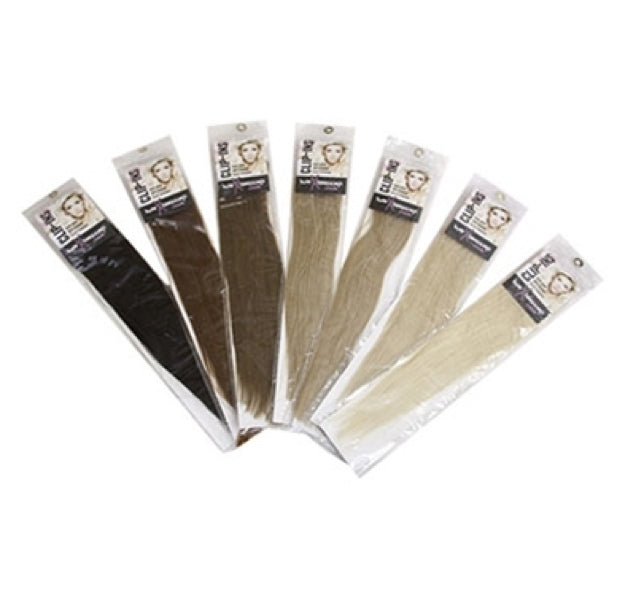
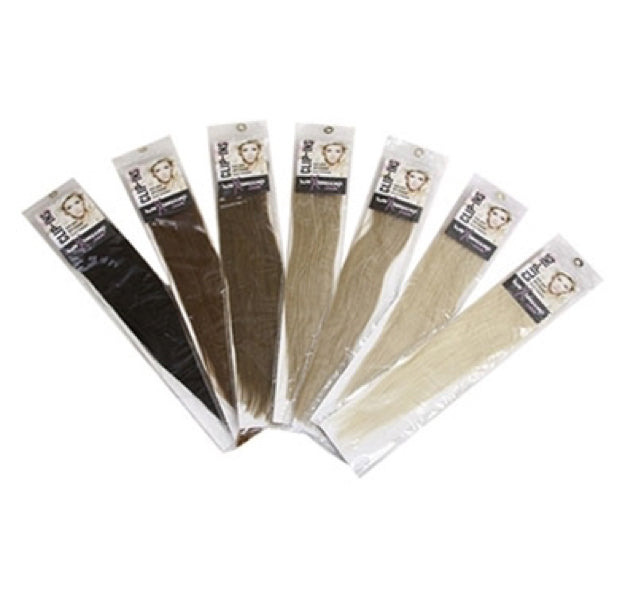
Nano-Tip hair extensions are an individual strand extension method fitted using small Nano Rings rather than heat, liquid glue or Tape-In adhesive.
Each Nano-Tip strand has a fine metal attachment at the top. During professional fitting, an appropriate section of natural hair is threaded through a compatible Nano Ring, the Nano-Tip attachment is inserted and the ring is securely closed using suitable professional pliers.
HairXtensions Nano Rings are approximately 3mm in size, allowing the attachment to remain extremely discreet within the natural hair.
A smaller attachment does not remove the need for correct sectioning, suitable extension weight, comfortable placement and professional ring closure.
This guide focuses specifically on professional Nano-Tip application. For removal instructions, visit our separate Nano-Tip Hair Extension Removal Guide .
Quick answer: Nano-Tip extensions are fitted by threading a suitable section of natural hair through a compatible Nano Ring, inserting the fine Nano-Tip attachment, positioning the ring comfortably and closing it evenly using professional pliers. Correct ring choice, section size and extension weight are essential for a secure fitting.
Professional Fitting Recommended
Nano-Tip extensions use very small attachment components, so accurate sectioning, positioning and ring closure are particularly important. The natural-hair section needs to be appropriate for the chosen extension weight and the attachment should sit securely without excessive tension.
Nano-Tip Hair Extension Fitting Video
Watch our HairXtensions Nano-Tip application demonstration, then follow the updated professional fitting guidance below.
What Are Nano-Tip Hair Extensions?
Nano-Tips are individual human hair extension strands with a fine metal attachment designed to fit inside a small Nano Ring.
Once the natural hair and Nano-Tip attachment are positioned inside the ring, professional pliers are used to close the attachment securely.
Small Attachment
HairXtensions Nano Rings are approximately 3mm, creating a discreet individual strand fitting.
No Heat During Fitting
Standard Nano-Tip fitting uses a mechanically closed ring rather than heat fusion.
Start With a Professional Consultation
Nano-Tips are discreet, but attachment size alone does not determine whether the method is suitable for a particular client.
Check whether the natural hair can comfortably support the planned extension weight.
Significantly weak, damaged or thinning areas require careful assessment.
Select extension weight according to the natural hair and desired finished result.
Choose the closest extension shade before fitting rather than planning to chemically alter the extensions afterwards.
Select a compatible ring for the Nano-Tip attachment and natural hair.
Explain brushing, washing, attachment care and professional maintenance before fitting.
Do not automatically attach a Nano Ring to the skin as an improvised allergy test. Carry out an appropriate consultation and follow any relevant manufacturer instructions.
Preparing the Natural Hair Before Nano-Tip Fitting
The fitting area should be clean, dry and manageable without unnecessary oily or heavy product build-up around the roots.
- Detangle the natural hair thoroughly.
- Make sure the hair and root area are completely dry.
- Avoid oils and rich treatments around the fitting area.
- Work with clean, controlled sections.
- Keep surrounding hair securely clipped away.
- Organise extension shades, lengths and strand weights before fitting.
There is no universal need for exactly two deep-cleansing washes several days before every fitting. The practical requirement is properly prepared hair without excessive oil or slippery product residue around the attachment area.
Which Nano Rings Should You Use?
HairXtensions stocks several Nano Ring options, including standard, silicone-lined and pre-loaded rings.
Small professional Nano Ring attachments available in several colours.
An alternative professional ring option featuring an internal silicone lining.
Pre-loaded rings designed to make professional application more convenient.
Choose a ring shade that blends discreetly with the client's root colour.
There is no single Nano Ring type that is automatically best for every client. Ring choice should suit the Nano-Tip, natural hair and professional fitting technique.
0.5g vs 1g Nano-Tip Hair Extensions
HairXtensions supplies Nano-Tip strands in different individual weights. Choosing between them should be based on more than simply describing the client's hair as fine or thick.
0.5g Nano-Tips
Lighter individual strands allow extension weight to be distributed in smaller amounts throughout the fitting.
1g Nano-Tips
Heavier individual strands provide more extension hair per attachment and require an appropriate supporting natural-hair section.
Consider natural hair density, condition, section size, placement and desired volume when selecting strand weight.
Tools Needed to Fit Nano-Tip Extensions
How Much Natural Hair Should Go Through a Nano Ring?
The supporting natural-hair section needs to be appropriate for both the Nano-Tip strand and the small ring being used.
Section Too Small
Too few natural hairs may be asked to support inappropriate extension weight.
Section Too Large
The section may not pass comfortably through the ring or allow the attachment to close correctly.
A smaller ring does not mean the smallest possible natural-hair section is best. Section size and extension weight still need to be matched appropriately.
How Close to the Scalp Should Nano-Tips Be Fitted?
Position each attachment close enough to create a neat, discreet result while leaving enough room for comfortable natural movement.
Placement can vary according to the fitting area and natural direction of hair growth, so one fixed measurement should not be treated as a universal rule.
The Nano Ring should not sit so tightly against the scalp that the client experiences significant pulling, pinching or persistent discomfort.
How to Fit Nano-Tip Hair Extensions
Follow this professional workflow alongside the Nano-Tip fitting video above.
Prepare the Nano Ring
Load a compatible Nano Ring onto the EZ Threader or prepare the pre-loaded ring system being used.
Create a Clean Natural-Hair Section
Isolate an appropriate amount of natural hair while keeping neighbouring hairs out of the section.
Feed the Hair Through the Nano Ring
Place the section into the threader and carefully transfer the Nano Ring onto the natural hair without forcing the tool.
Insert the Nano-Tip
Feed the fine Nano-Tip attachment into the Nano Ring alongside the natural-hair section.
Position the Attachment
Move the Nano Ring into the intended fitting position while allowing comfortable natural movement.
Check the Alignment
Confirm that the Nano-Tip is correctly seated and neighbouring hairs have not crossed into the section.
Close the Nano Ring
Use suitable professional pliers to close the ring evenly and securely.
Check the Finished Attachment
Make sure the ring is secure, correctly positioned and not creating excessive tension on the natural hair.
Continue Through the Fitting
Repeat systematically while maintaining consistent sectioning, placement and extension-weight distribution.
What Should a Correctly Fitted Nano-Tip Look & Feel Like?
The attachment should not immediately slide after fitting.
There should be no significant or persistent pulling.
The Nano Ring should be securely and consistently closed.
The natural hair should appropriately support the extension strand.
Neighbouring hairs should not be trapped across the attachment.
The attachment should blend neatly within the surrounding hair.
Why Do Nano-Tip Extensions Slip?
If the complete Nano-Tip and ring begin moving down the natural hair, this is attachment slippage rather than extension-hair shedding.
Possible contributing factors include:
- Unsuitable Nano Ring choice
- Incorrect natural-hair section size
- Incorrect ring closure
- Oil or heavy product around the attachment
- Natural-hair characteristics
- Aggressive brushing
- Poor placement
- Overdue maintenance
Do not automatically reclamp every slipping attachment without first investigating why the Nano Ring has moved.
Common Nano-Tip Fitting Mistakes
Do
- Assess the natural hair first
- Choose a compatible Nano Ring
- Select appropriate strand weight
- Create clean, controlled sections
- Keep cross hairs out of attachments
- Allow comfortable movement
- Close rings evenly
- Check each attachment after fitting
Avoid
- Using extremely small sections simply because the ring is small
- Automatically choosing 1g strands for every client with thick hair
- Forcing too much hair through a Nano Ring
- Clamping attachments tightly against the scalp
- Repeatedly crushing the ring
- Trapping neighbouring hairs
- Putting oils directly around fitted rings
- Ignoring repeated slippage
Nano-Tip Hair Extension Aftercare
- Brush gently from the ends upwards.
- Support fitted extensions close to the attachment while brushing.
- Wash with the head upright.
- Avoid aggressively rubbing extension lengths together.
- Keep oils and heavy conditioners away from the Nano Rings.
- Use conditioning products mainly through the mid-lengths and ends.
- Dry the attachment areas thoroughly.
- Never sleep with fitted extensions wet or damp.
- Secure longer hair loosely before sleeping.
- Attend professional maintenance when required.
How Are Nano-Tip Extensions Removed?
Nano-Tip removal is covered in its own dedicated guide. The fitted Nano Ring is professionally reopened using suitable removal pliers before the extension and natural hair are separated.
The removal guide also covers stubborn Nano Rings, natural shed hair, root matting, extension reuse and what should be checked before refitting.
Nano-Tip Removal GuideShop Nano-Tip Extensions & Fitting Tools
Browse our Nano-Tip Remy human hair extensions, Nano Rings, threaders and professional Nano/Micro Ring application tools.
Shop Nano-Tip Extensions Shop Nano Rings Shop Fitting ToolsRelated Hair Extension Guides
Nano-Tip Hair Extension Fitting – FAQs
What are Nano-Tip hair extensions?
Nano-Tips are individual human hair extension strands with a fine metal attachment designed to be professionally secured using small Nano Rings.
How are Nano-Tips fitted?
A suitable section of natural hair is threaded through a A suitable section Nano Ring, the Nano-Tip attachment is inserted and the ring is professionally closed using suitable pliers.
Do Nano-Tips require heat?
Standard Nano Ring application does not require a heat connector.
Do Nano-Tips use glue?
Standard Nano-Tip application uses Nano Rings rather than liquid glue or heat-fused keratin.
Should I use 0.5g or 1g Nano-Tips?
Choose strand weight according to natural hair density, condition, section size, placement and desired result rather than relying on one fine-hair versus thick-hair rule.
How much natural hair should go through a Nano Ring?
Use enough natural hair to appropriately support the selected extension weight while still allowing the section to pass and sit correctly within the ring.
How close should Nano-Tips sit to the scalp?
They should sit neatly while allowing comfortable natural movement, without excessive scalp tension.
Why are my Nano-Tips slipping?
Ring choice, section size, closure, product around the attachment, natural-hair characteristics, brushing, placement and maintenance can all contribute.
Should Nano-Tips hurt after fitting?
Significant or persistent pain should not simply be accepted as normal. Have uncomfortable attachments checked for section size, placement, trapped hairs and excessive tension.
How do you remove Nano-Tip hair extensions?
Nano-Tip removal is covered in our separate Nano-Tip Removal Guide. The fitted Nano Ring is professionally reopened before the extension is separated from the natural hair.
Do Nano-Tips need acetone or bond remover?
Standard Nano-Tip fittings use mechanically closed Nano Rings, so acetone or keratin bond remover is not normally required for removal.
Small Attachments Still Need Careful Fitting
Nano-Tips provide a discreet ring-based extension method, but successful application still depends on suitable strand weight, compatible Nano Rings, controlled sectioning, comfortable placement and correct closure.
Shop Nano-Tip Extensions Nano-Tip Removal Guide All Fitting & Removal Guides