


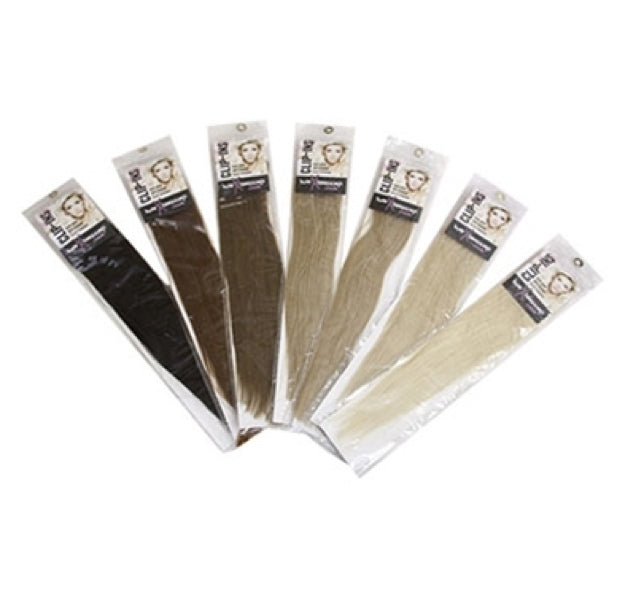
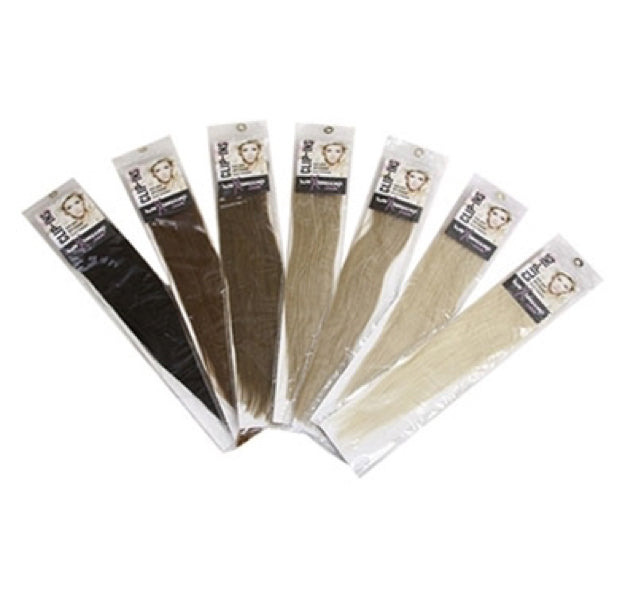
One of the biggest worries people have before trying Clip-In hair extensions is whether the clips or wefts will be easy to see.
The good news is that Clip-In hair extensions can look very discreet when they are correctly positioned, colour matched and blended with the natural hair. However, they are not automatically invisible. Placement, natural hair density, colour, extension length and styling can all affect the finished result.
If your Clip-Ins are showing, it usually doesn't mean there is something wrong with the extensions. A few small changes to where you position the pieces or how you style your natural hair can often make a noticeable difference.
✨ Quick Answer: Are Clip-In Hair Extensions Noticeable?
They don't have to be. Correct placement, sufficient natural-hair coverage, a close colour match and good blending can help Clip-In extensions look much more discreet. Avoid positioning wefts too close to the hairline, parting or other areas where there isn't enough natural hair to cover the clips.
Why Do Clip-In Hair Extensions Sometimes Show?
Clip-In extensions are attached to small wefts with clips that grip onto sections of your natural hair. Those clips need to sit underneath enough natural hair to remain concealed.
Some of the most common reasons Clip-Ins become visible include:
Placement Too High
Wefts positioned too close to the crown or parting can become visible when the natural hair moves.
Too Close to the Hairline
There may not be enough natural hair around the front or sides to completely cover the clips.
Poor Colour Match
Even correctly positioned extensions can stand out if there is a noticeable colour difference between the extension hair and your own lengths.
Not Enough Blending
If your natural haircut finishes very bluntly or is significantly shorter than the extensions, the transition may be more obvious.
Where Should Clip-In Extensions Be Positioned?
Clip-In pieces are generally positioned through the back and sides of the head, beginning lower down and working upwards in controlled sections.
The aim is to leave enough natural hair above each weft to cover the clips and attachment area.
Try to avoid positioning larger pieces immediately underneath your natural parting or extremely close to the outer hairline, where the clips are more likely to become visible.
⚠️ Don't Keep Moving the Wefts Higher
More height does not necessarily mean a better blend. If a top weft is showing through your natural hair, moving it slightly lower may give you more hair to cover the attachment.
How to Hide the Top Clip-In Wefts
The highest pieces are often the ones people worry about most because they sit closer to the crown.
Before fitting the top weft, check how much natural hair will fall over it once your section is released. If you can clearly feel or see the clips through your hair, move the attachment slightly lower.
After fitting, release the natural hair above the weft and gently brush the surrounding hair into place.
💡 Top-Weft Tip
Before leaving the house, check your Clip-Ins from the back and sides as well as the front. A second mirror or phone camera can help you spot an exposed clip that may not be visible from your normal mirror angle.
How to Hide Clip-Ins in Fine Hair
Finer or lower-density hair can provide less natural coverage over the attachment areas, so placement becomes particularly important.
Rather than trying to fit every piece as high as possible, concentrate on areas where you have enough natural hair to comfortably conceal the wefts.
Some wearers also find that gently creating a little texture at the root can give the clips additional grip. If you choose to do this, avoid aggressive or repeated backcombing that could unnecessarily stress the natural hair.
If a particular piece cannot be comfortably concealed, it may be better to leave that piece out rather than force it into an unsuitable position.
How to Hide Clip-Ins in Thick Hair
Thicker hair can provide more coverage over the clips, but blending the extension lengths may require additional attention.
Distribute the pieces through the hair rather than concentrating all of the extension hair in one area. Once fitted, gently combine the natural hair and extension hair so that the transition between them looks balanced.
If your natural hair has a very blunt or heavily layered cut, professional blending may help create a more natural-looking transition.
Colour Matching Makes a Big Difference
Even perfectly fitted Clip-Ins can appear more obvious when the extension shade is noticeably different from your natural hair.
For colour matching, compare the extensions with the mid-lengths and ends of your natural hair rather than relying only on your root colour.
Hair can also contain several different tones, so look at your overall lengths in natural daylight where possible.
🎨 Need Help Matching Your Shade?
Compare our full range using the Hair Extension Colour Chart.
If you're unsure, use our Colour Match Guarantee before opening or using your Clip-In extensions.
Blend the Texture as Well as the Colour
Colour isn't the only thing that affects how natural Clip-In extensions look. The texture of the extensions and your own hair should also work together.
For example, very straight extensions underneath strongly waved natural hair may create an obvious difference between the two.
HairXtensions Clip-In extensions are made from human hair and can be carefully heat styled. Use a suitable heat protection product, keep temperatures sensible and avoid unnecessary repeated heat.
If you're curling or waving the finished hairstyle, gently styling sections containing both your natural hair and extension hair can help visually bring the two together.
How to Blend Clip-Ins With Short Hair
Blending extensions with shorter hair can require more preparation because there may be a greater difference between the natural starting length and the extension length.
Some useful techniques include:
- Positioning the lowest wefts carefully so shorter underneath layers don't remain visibly separated.
- Distributing the extension pieces evenly through suitable sections.
- Styling the natural hair and extensions together.
- Choosing a realistic extension length for the starting hair length.
- Having the extensions professionally shaped or blended if required.
For more detailed advice, read our Guide to Blending Hair Extensions With Short Hair.
7 Reasons Your Clip-In Extensions May Be Showing
⚠️ Common Clip-In Visibility Problems
- The wefts are fitted too close to your parting.
- The side pieces are positioned too close to the hairline.
- There isn't enough natural hair covering the top pieces.
- The extension shade does not closely match your own hair.
- The extensions and natural hair have very different textures.
- Your natural haircut creates an obvious line above the extensions.
- The extension pieces are unevenly distributed around the head.
Should All 7 Clip-In Pieces Be Used?
HairXtensions full-head Clip-In sets contain 7 individual weft pieces in different widths.
You don't necessarily have to force every piece into the same position or use every piece for every hairstyle. Your natural hair density, head shape, chosen style and required amount of volume can all influence the arrangement.
The priority should be a comfortable, balanced placement where the clips remain adequately covered.
Can Clip-In Extensions Be Worn With Hair Up?
Clip-In extensions can be incorporated into different hairstyles, but an updo may expose attachment areas that would normally be hidden when the hair is worn down.
If you're creating a half-up or tied style, check the direction of the hair and make sure the wefts remain concealed from every visible angle.
For very high ponytails or styles where large areas of the underneath hair are exposed, a dedicated Ponytail Hair Extension may sometimes be a more straightforward removable option.
How to Make Clip-In Hair Extensions Look More Natural
✨ Natural-Looking Clip-In Checklist
- Choose the closest available colour match.
- Section the natural hair neatly before fitting.
- Work from lower sections upwards.
- Keep the clips away from exposed hairline and parting areas.
- Leave enough natural hair above each weft for coverage.
- Distribute the pieces rather than bunching them together.
- Blend the natural hair and extensions after fitting.
- Match the texture of your extensions to your finished hairstyle.
- Check the back and sides before finishing.
Do Clip-In Extensions Look Fake?
Clip-In extensions do not automatically look fake, but a natural-looking result depends on several factors.
An obvious colour mismatch, exposed clips, unsuitable placement or a very strong difference between the natural hair and extension length can make the extensions easier to notice.
Taking a little extra time with fitting and blending generally produces a much better result than simply attaching the pieces as quickly as possible.
Frequently Asked Questions
Can people see Clip-In hair extensions?
Clip-Ins can be discreet when positioned beneath enough natural hair and correctly blended. Poor placement or insufficient coverage can make the clips easier to see.
How do I stop Clip-In clips showing?
Try moving the weft slightly lower, leave more natural hair above the attachment and avoid positioning the clips too close to the parting or hairline.
Why can I see the top of my Clip-In extensions?
The top weft may be positioned too high or there may not be enough natural hair above it to provide coverage. Try a slightly lower section and reassess the blend.
Do I need to use every Clip-In piece?
Not necessarily. HairXtensions sets contain seven individual pieces, but the most appropriate arrangement can vary according to your natural hair and chosen hairstyle.
Can Clip-Ins look natural in fine hair?
They can, but finer hair may provide less coverage over the wefts. Careful placement and avoiding areas where the clips can show are particularly important.
Practice Makes Clip-Ins Easier to Hide
Clip-In hair extensions are designed to be removable, so one of their biggest advantages is that you can experiment with placement until you find the arrangement that works best for your hair.
Focus on three things: colour match, coverage and blending.
If the clips are covered by enough natural hair, the colour works with your own lengths and the extensions are blended into your finished hairstyle, the result can look much more natural and discreet.
Need Help Fitting Your Clip-Ins?
Follow our dedicated fitting tutorial for step-by-step guidance on sectioning, positioning the individual wefts and blending your extensions.
Ready to Try Clip-In Hair Extensions? ✨
Explore our removable 7-piece human hair Clip-In sets in 14", 18", 20" and 22" lengths and find your closest available shade.