


9 Hair Extension Methods Compared: Which Type Is Right for You?
Choosing hair extensions can be confusing because different methods can look similar once fitted while working very differently underneath the natural hair.
Some extensions are fitted strand by strand, some use flat adhesive panels, some add hair through a continuous weft, and others are completely removable whenever you want to change your style.
This guide compares nine HairX hair extension methods: Nail-Tips, Stick-Tips, Nano-Tips, Micro-Loops, Tape-Ins, Hair Wefts, Clip-Ins, Ponytails and Clip-In Fringes.
Rather than declaring one method the best, we will compare how each one is fitted, how it is removed, whether it is temporary or professionally fitted, the type of maintenance involved and the main questions to consider before choosing.
✔ Nail-Tip / U-Tip — individual keratin bonds fitted using controlled heat
✔ Stick-Tip / I-Tip — individual strands secured with compatible Micro Rings
✔ Nano-Tip — individual strands fitted using smaller Nano Rings
✔ Micro-Loop — individual strands supplied with a pre-attached loop and ring
✔ Tape-In — flat adhesive extension panels professionally fitted into rows
✔ Hair Weft — continuous extension hair used with professional weave/weft methods
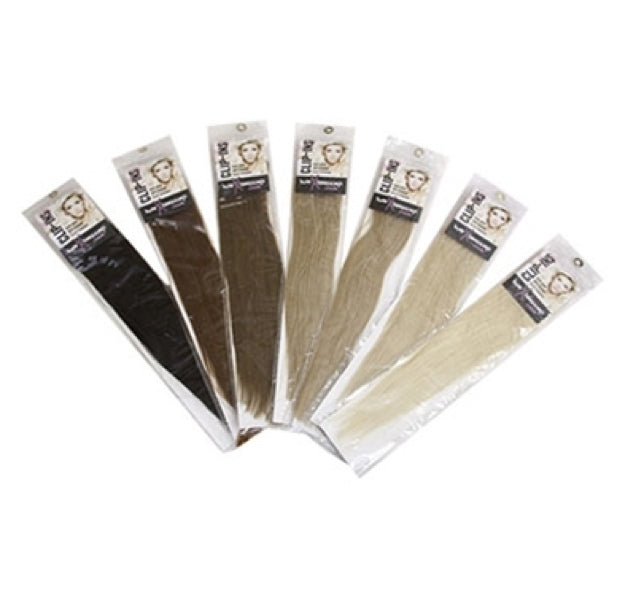
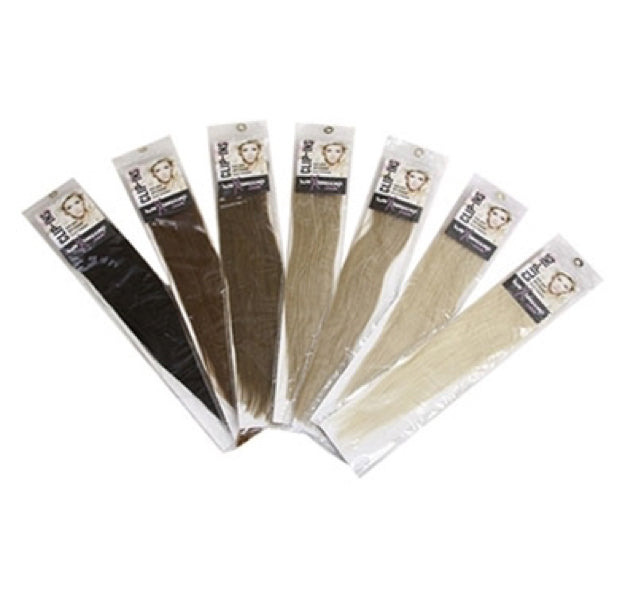
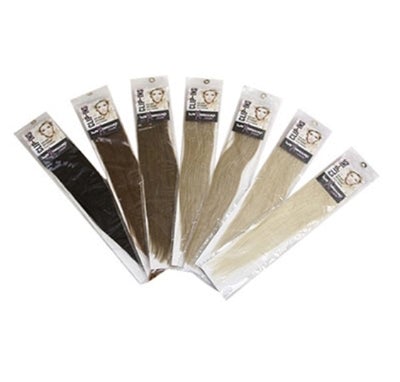
✔ Clip-In — removable extension wefts with built-in clips
✔ Ponytail — removable wrap-around ponytail hairpiece
✔ Clip-In Fringe — removable fringe for temporarily changing the front hairstyle
Which Hair Extension Method Is Best?
There is no single hair extension method that is best for everyone.
The right option depends on factors including:
- Your natural hair density
- Your natural hair strength and condition
- How much extra length you want
- How much additional volume you want
- Whether you want temporary or fitted extensions
- Your normal hairstyles
- Your washing and styling routine
- Your willingness to attend professional maintenance
- The type of attachment you prefer
- Your budget for fitting and maintenance
What Is the Main Difference Between Hair Extension Methods?
The biggest difference is how the additional hair is attached.
The nine methods in this guide can broadly be divided into three groups:
- Individual strand methods: Nail-Tip, Stick-Tip, Nano-Tip and Micro-Loop
- Panel or weft methods: Tape-In and Hair Weft
- Removable methods: Clip-Ins, Ponytails and Clip-In Fringes
What Are Fitted Hair Extensions?
Fitted hair extensions remain attached to the natural hair between appointments.
Depending on the method, they may use keratin bonds, rings, adhesive panels or professionally installed Hair Wefts.
What Are Removable Hair Extensions?
Removable extensions are designed to be fitted and removed as required rather than remaining permanently attached between maintenance appointments.
HairX Clip-Ins, Ponytails and Clip-In Fringes fall into this category.
Should You Choose Fitted or Removable Extensions?
Choose according to how you actually want to wear the hair.
If you want additional hair available every day without fitting a separate hairpiece each morning, a professionally fitted method may be more suitable.
If you mainly want additional length or volume for selected days, evenings or events, removable extensions may offer greater flexibility.
Do not select extensions based only on how small or discreet an attachment looks in a photograph. Natural-hair condition, extension weight, correct section size, professional placement, aftercare and removal all influence suitability.
1. What Are Nail-Tip / U-Tip Hair Extensions?
Nail-Tip extensions are individual strands with a prepared keratin bond at the top.
During professional fitting, the bond is softened using a specialist heat connector and moulded around an appropriate section of natural hair.
How Are Nail-Tip Extensions Fitted?
They are fitted one strand at a time.
The extensionist sections the natural hair, positions the keratin tip, applies controlled heat and shapes the softened bond around the natural-hair section.
Do Nail-Tip Extensions Use Heat?
Yes.
A professional heat connector is used to soften the prepared keratin attachment during application.
Do Nail-Tips Use Glue?
They use a prepared keratin bond rather than a separate ring or Tape-In panel.
How Are Nail-Tip Extensions Removed?
A compatible professional bond-removal product is used to help break down the keratin before suitable removal pliers are used to release the extension.
What Is the Main Advantage of Nail-Tips?
Each strand can be positioned individually, allowing a professional to distribute extension hair and colour across suitable areas of the head.
What Should You Consider Before Choosing Nail-Tips?
Consider whether you are comfortable with:
- Heat being used during professional fitting
- Individual keratin attachments
- Professional removal
- Regular fitted-extension aftercare
Are Nail-Tip Extensions Damage-Free?
No fitted extension method should be described as completely damage-free.
Suitable natural hair, appropriate strand weight, correct fitting, careful maintenance and professional removal all matter.
2. What Are Stick-Tip / I-Tip Hair Extensions?
Stick-Tip extensions are individual strands with a narrow attachment tip.
The natural hair and extension are secured together inside a compatible Micro Ring.
How Are Stick-Tips Fitted?
A professional takes an appropriate section of natural hair, passes it through a compatible Micro Ring, inserts the Stick-Tip attachment and closes the ring using suitable application pliers.
Do Stick-Tips Need Heat?
No heat-fusion connector is normally required for standard Micro Ring application.
Do Stick-Tips Use Adhesive?
No.
The extension is mechanically secured using a compatible ring.
How Are Stick-Tips Removed?
The fitted Micro Ring is reopened using suitable professional removal pliers before the extension and natural hair are separated.
Can Stick-Tip Extension Hair Be Reused?
Potentially.
If the extension hair and attachment remain in suitable condition, the strands may be professionally assessed for refitting with fresh compatible rings.
What Is the Main Advantage of Stick-Tips?
They provide individual strand placement without requiring heat during standard fitting.
What Should You Consider Before Choosing Stick-Tips?
Micro Ring size, natural-hair section size, extension weight, placement, slippage, maintenance and professional removal all need consideration.
Shop Stick-Tip Hair Extensions
3. What Are Nano-Tip Hair Extensions?
Nano-Tips are individual extension strands designed to be fitted using small compatible Nano Rings.
The basic attachment principle is similar to a ring-based Stick-Tip fitting, but the Nano Ring is considerably smaller.
Are Nano-Tips Keratin Bonds?
No.
Nano-Tips are a ring-based fitting method and should not be confused with Nail-Tip / U-Tip keratin extensions.
How Are Nano-Tips Fitted?
An appropriate section of natural hair is passed through a Nano Ring before the Nano Tip attachment is inserted and the ring is professionally closed.
Do Nano-Tips Need Heat?
No heat-fusion connector is normally required for standard Nano Ring application.
Why Are Nano-Tips Considered Discreet?
The attachment is relatively small.
However, no extension attachment should be described as invisible because visibility depends on natural-hair density, placement, section size, ring colour and hairstyle.
Are Nano-Tips Automatically Best for Fine Hair?
No.
A small attachment does not automatically make the method suitable for fine or lower-density hair.
The natural hair still needs sufficient strength and density to support the selected extension strand.
What Is the Difference Between 0.5g and 1.0g Nano-Tips?
A 0.5g strand contains approximately half the amount of extension hair of a 1.0g strand.
The appropriate strand weight depends on the natural hair and planned fitting rather than one weight being universally better.
How Are Nano-Tips Removed?
The Nano Ring is reopened using compatible professional removal pliers before the extension is released.
A closed Nano Ring should not be dragged through the natural hair.
What Is the Main Advantage of Nano-Tips?
The individually fitted strands provide detailed placement with a relatively compact ring attachment.
4. What Are Micro-Loop Hair Extensions?
Micro-Loop extensions are individual strands supplied with a small loop and ring already attached.
The loop helps pull a section of natural hair through the ring before the extension is positioned and secured.
How Are Micro-Loops Different from Stick-Tips?
With Stick-Tips, the extension strand and Micro Ring are separate components during fitting.
With Micro-Loops, the loop and ring are already incorporated into the extension strand.
Are Micro-Loops Tool-Free?
No.
The loop assists with threading the natural hair through the attachment, but suitable professional pliers are still required to close the ring correctly.
Do Micro-Loops Need Heat?
No heat-fusion connector is normally required.
Do Micro-Loops Use Glue?
No.
The extension is held by the ring attachment.
How Are Micro-Loops Removed?
The ring is professionally reopened before the extension is separated from the natural hair.
What Is the Main Advantage of Micro-Loops?
The built-in loop makes the threading stage different from traditional Stick-Tips while retaining a mechanical ring-based attachment.
Shop Micro-Loop Hair Extensions
5. What Are Tape-In Hair Extensions?
Tape-In extensions consist of flat sections of extension hair with specially designed adhesive attachment areas.
They are professionally fitted in rows rather than as individual strand attachments.
How Are Tape-In Extensions Fitted?
A common fitting technique positions a controlled section of natural hair between two compatible Tape-In panels.
The upper and lower panels are carefully aligned to form a flat attachment.
Do Tape-Ins Need Heat?
Standard Tape-In fitting does not require a heat-fusion connector.
Do Tape-Ins Use Adhesive?
Yes.
The panels use specially designed Tape-In adhesive.
What Is a Tape Sandwich?
A traditional tape sandwich places an appropriate section of natural hair between two extension panels.
Are Tape-Ins Invisible?
No.
The panels are flat and can sit discreetly under sufficient natural hair, but visibility varies with placement, density and hairstyle.
Why Is Root Preparation Important for Tape-Ins?
Oil, conditioner and styling residue around the fitting area can interfere with adhesive performance.
The intended attachment area should therefore be properly prepared before fitting.
What Products Should Be Kept Away from Tape Attachments?
Conditioners, heavy masks, oils, rich creams and serums should mainly be kept through the mid-lengths and ends rather than repeatedly applied over the adhesive panels.
Can Tape-Ins Be Reused?
Potentially.
If the extension hair remains suitable, panels can be professionally cleaned, prepared with fresh compatible replacement tape and refitted.
How Are Tape-Ins Removed?
A compatible Tape-In remover is used to release the adhesive before the panels are carefully separated.
Resistant panels should not be pulled apart by force.
What Is the Main Advantage of Tape-Ins?
The flat panels can add a relatively broad section of extension hair with fewer individual attachment points than strand-by-strand systems.
6. What Are Hair Weft Extensions?
A Hair Weft is a continuous curtain of extension hair joined together along its upper seam.
Unlike individual extensions, a wider quantity of hair can be incorporated across professionally planned rows.
How Are Hair Wefts Fitted?
Hair Wefts can be used with different professional fitting techniques.
One example is an LA Weave-style installation, where suitable rings or beads create a supporting row before the Weft is stitched into position.
Do All Hair Wefts Use the Same Attachment Method?
No.
Different professional systems can use Hair Wefts, so the attachment method should always be confirmed with the extensionist.
Can Hair Wefts Be Cut?
Continuous wefts can be professionally customised into appropriate widths for the chosen rows.
What Is the Main Advantage of a Hair Weft?
A Weft can provide substantial additional hair across larger fitting areas without requiring every section of extension hair to be fitted as an individual strand.
Are Hair Wefts Suitable for Everyone?
No.
The professional must consider the total Weft weight, row position, supporting natural hair, scalp condition and fitting technique.
Can Hair Wefts Be Reused?
Potentially.
If the extension hair and Weft seam remain in suitable condition, the hair may be professionally assessed for another fitting.
How Are Hair Wefts Removed?
The removal process depends on the fitting technique.
For stitched ring-supported methods, the professional carefully releases the stitching and attachment components before separating the Weft from the natural hair.
7. What Are Clip-In Hair Extensions?
Clip-In extensions are removable wefts with small clips attached to them.
They can be applied when additional length or volume is wanted and removed afterwards.
Do Clip-Ins Need Professional Fitting?
They are designed as a removable method and can normally be fitted at home once you are familiar with correct placement.
Do Clip-Ins Require Maintenance Appointments?
No professional grow-out maintenance is required because the extensions are removed after wear.
Can Clip-Ins Be Worn Every Day?
They can be worn regularly, but the clips and natural hair should still be handled carefully.
Avoid repeatedly creating unnecessary tension in exactly the same natural-hair sections.
Should Clip-Ins Be Removed Before Sleeping?
Yes.
Clip-In extensions should normally be removed before sleeping.
Should Clip-Ins Be Removed Before Showering?
Yes.
Wash the removable extension hair separately rather than showering while wearing the set.
Should Clip-Ins Be Removed Before Swimming?
Yes.
There is normally no reason to expose removable Clip-Ins to pool or sea water while attached.
What Is the Main Advantage of Clip-Ins?
They provide additional hair without committing to a fitted extension system or regular professional maintenance.
8. What Are Ponytail Hair Extensions?
Ponytail extensions are removable hairpieces designed to attach around an existing natural ponytail.
The current HairX Ponytail uses a wrap-around design with a built-in clip and fastening section.
What Is a Ponytail Extension Best Used For?
It is designed specifically to make an existing ponytail longer, fuller or both.
Is a Ponytail Extension the Same as a Clip-In Set?
No.
A Clip-In set usually contains several extension wefts positioned throughout the hair.
A Ponytail is one dedicated hairpiece attached around the natural ponytail.
Can a Ponytail Extension Be Worn High or Low?
Yes.
The finished position depends on where your natural ponytail is secured and whether the attachment can be positioned comfortably and securely.
Should a Ponytail Extension Be Removed Before Bed?
Yes.
It is a removable hairpiece and should normally be taken out before sleeping.
Should a Ponytail Extension Be Removed Before Swimming?
Yes.
Removing it avoids unnecessary exposure to chlorine, salt water and repeated soaking.
What Is the Main Advantage of a Ponytail Extension?
It provides a quick way to change one specific hairstyle without fitting extensions throughout the whole head.
9. What Are Clip-In Fringe Hair Extensions?
A Clip-In Fringe is a removable front hairpiece designed to temporarily create the appearance of a fringe without cutting the natural hair.
Why Choose a Clip-In Fringe?
It allows you to experiment with a different front hairstyle without committing to a permanent haircut.
Is a Clip-In Fringe a Full Hair Extension Method?
It serves a different purpose from full-head extensions.
Rather than adding substantial length throughout the hair, it changes the appearance around the forehead and front hairline.
Can a Clip-In Fringe Be Removed Every Day?
Yes.
It is designed as a removable hairpiece.
Should You Sleep in a Clip-In Fringe?
No.
Remove it before sleeping and store it gently between uses.
Shop Clip-In Fringe Hair Extensions
Which Hair Extension Methods Are Individually Fitted?
The main individual strand methods in the HairX range are:
- Nail-Tip / U-Tip
- Stick-Tip / I-Tip
- Nano-Tip
- Micro-Loop
Which Extension Methods Use Rings?
Stick-Tips, Nano-Tips and Micro-Loops use compatible ring-based attachment systems.
Some Hair Weft techniques can also use rings or beads to create the supporting row.
Which Hair Extensions Use Keratin?
Nail-Tip / U-Tip extensions use a prepared keratin bond that is professionally softened during fitting.
Which Hair Extensions Use Adhesive?
Tape-In extensions use specially designed adhesive attachment panels.
Which Extension Methods Do Not Need Heat?
Standard fitting for Stick-Tips, Nano-Tips, Micro-Loops and Tape-Ins does not normally require a heat-fusion connector.
Many Hair Weft techniques are also fitted without keratin-fusion heat.
Which Hair Extension Method Uses Heat?
Nail-Tip / U-Tip fitting uses controlled heat to soften the prepared keratin attachment.
Which Methods Are Completely Removable?
The main removable HairX options are:
- Clip-In extension sets
- Ponytail extensions
- Clip-In Fringes
Which Extensions Are Best if You Do Not Want Maintenance Appointments?
Removable methods do not require professional grow-out maintenance because they are taken out after wear.
They still require brushing, washing when needed and appropriate storage.
Which Extensions Are Best if You Want Hair Fitted All the Time?
Professionally fitted methods such as Nail-Tips, Stick-Tips, Nano-Tips, Micro-Loops, Tape-Ins and Hair Wefts may be more relevant if you want the additional hair to remain attached between appointments.
The right method still depends on the natural hair and professional assessment.
Which Method Has the Smallest Attachments?
Nano Ring attachments are among the smallest ring-based connections in the HairX range.
That does not automatically make them the most suitable choice for every head of hair.
Which Hair Extensions Lie Flat?
Tape-In extensions use flat adhesive panels that sit close to the scalp when appropriately fitted.
Hair Wefts can also create relatively flat rows depending on the installation technique.
Which Hair Extensions Add the Most Hair Per Attachment Area?
Hair Wefts and Tape-In panels can introduce broader sections of additional hair compared with an individual strand attachment.
The appropriate total weight still needs to be matched to the natural hair.
Which Method Offers the Most Individual Placement Control?
Individual strand methods provide detailed strand-by-strand placement.
Nail-Tips, Stick-Tips, Nano-Tips and Micro-Loops can therefore be distributed individually throughout suitable fitting areas.
Which Extensions Can Be Used for Multi-Tonal Colour?
Most methods can use more than one extension shade where matching products are available.
Individual strand methods give particularly detailed control over exactly where different colours are positioned.
Can Different Hair Extension Methods Be Combined?
Yes, in some professionally planned fittings.
For example, a professional may combine a Hair Weft with individually positioned Nano Tips, or use Tape-Ins alongside another suitable extension method.
Are Hybrid Hair Extension Fittings Better?
Not automatically.
A hybrid system is useful only when combining methods serves a genuine fitting purpose.
Using two extension systems should never simply be an excuse to add excessive extension weight.
Which Method Is Best for Fine Hair?
There is no universal method that can automatically be labelled the best for fine hair.
A professional needs to consider:
- Hair density
- Individual strand strength
- Areas of lower density
- Extension weight
- Attachment size
- Section size
- Total number of extensions
Are Nano-Tips Always Best for Fine Hair?
No.
The small attachment can be discreet, but the natural hair still has to support the extension strand.
Are Tape-Ins Good for Fine Hair?
They may be suitable in some cases because the extension weight is distributed across a wider attachment panel.
However, they are not automatically appropriate for every fine-haired client.
Are Wefts Suitable for Fine Hair?
Potentially in selected cases, depending on the fitting method, amount of hair used, natural-hair density and available supporting hair.
Which Extension Method Is Best for Thick Hair?
Again, there is no single answer.
Thicker natural hair may need sufficient extension density to prevent the added lengths from appearing thin compared with the natural hair above.
Which Method Is Best for Short Hair?
The main challenge with shorter hair is blending the natural haircut into the extension lengths.
Method choice, attachment coverage, extension density and professional cutting all matter.
Can Very Short Hair Wear Extensions?
Potentially, but suitability depends heavily on whether there is sufficient length and density to conceal attachments and create a convincing transition.
Which Extension Method Is Best for Adding Volume Only?
Several methods can be used primarily for fullness rather than dramatic additional length.
The amount and placement of extension hair matter more than simply choosing one specific attachment method.
Which Extension Method Is Best for Adding Length?
Nail-Tips, Stick-Tips, Nano-Tips, Micro-Loops, Tape-Ins and Hair Wefts can all create substantial additional length when the natural hair is suitable and sufficient extension density is fitted.
Which Extensions Are Best for Occasional Wear?
Clip-Ins, Ponytails and Clip-In Fringes are specifically useful when you want to fit additional hair only when needed.
Which Extensions Are Best for Holidays?
This depends on whether you want fitted extensions throughout the trip or a removable style.
Remember that chlorine, salt water, strong UV exposure and repeated soaking can affect extension condition and colour regardless of method.
Which Extensions Are Best for Swimming?
No method becomes immune to the effects of pool or sea water.
Fitted extensions can generally remain attached, while removable Clip-Ins, Ponytails and Fringes are normally better removed before swimming.
Which Extensions Are Best for Exercise?
Fitted extensions can normally remain in during exercise, but sweaty or damp root areas should be dried afterwards.
Removable hairpieces can often simply be taken out for vigorous exercise.
Which Hair Extensions Can You Sleep In?
Professionally fitted extensions remain attached during sleep.
The hair and attachment areas should be dry before bed and longer lengths can be gently secured where appropriate.
Clip-Ins, Ponytails and Clip-In Fringes should normally be removed.
Which Hair Extensions Need the Most Aftercare?
All extension hair needs appropriate care, but fitted systems also require attention around the attachment areas and professional maintenance.
Removable extensions avoid attachment maintenance but still need careful brushing, washing and storage.
Which Method Is Easiest to Wash?
There is no single winner.
Different systems require different techniques:
- Ring methods need careful brushing and drying around individual attachments
- Tape-Ins require products to be kept away from adhesive panels
- Wefts need careful cleaning and drying around fitted rows
- Removable extensions can be washed separately from the natural hair
Which Hair Extensions Are Easiest to Remove?
Removable Clip-Ins, Ponytails and Fringes are designed to be taken out by the wearer.
Professionally fitted extensions require the correct method-specific removal procedure.
How Are Ring Extensions Removed?
Compatible rings are professionally reopened using suitable removal pliers before the extension is released.
How Are Keratin Extensions Removed?
A suitable bond-removal product and professional removal tool are used to break down and release the keratin attachment.
How Are Tape-In Extensions Removed?
A compatible adhesive remover is used before the panels are carefully separated.
How Are Wefts Removed?
The removal technique depends on the installation system used.
Can You Remove Fitted Hair Extensions Yourself?
Professional removal is recommended.
Poor visibility, incorrect tools and pulling against attachments can create unnecessary stress on the natural hair.
Which Hair Extensions Can Be Reused?
Several methods may allow suitable extension hair to be professionally reused, including Stick-Tips, Nano-Tips, some Hair Wefts and Tape-Ins.
Reuse depends on the actual condition of the hair and attachment rather than being guaranteed.
Can Nail-Tip Extensions Be Reused?
Some professional systems allow suitable extension hair to be re-tipped using new keratin material, provided the hair remains in appropriate condition.
Can Tape-In Extensions Be Retaped?
Yes, suitable panels may be cleaned and professionally prepared with fresh compatible replacement tape.
Can Old Rings Be Reused?
Fresh compatible rings are generally preferable during professional refitting because previously worn rings may have been compressed, reopened or distorted.
Do Hair Extensions Damage Natural Hair?
Any fitted extension method can place stress on the natural hair if it is unsuitable, too heavy, poorly fitted, poorly maintained or incorrectly removed.
The method name alone does not determine whether a fitting is appropriate.
Which Hair Extension Method Is the Safest?
There is no universally safest method for every person.
Suitability depends on natural-hair condition, appropriate extension weight, attachment placement, professional technique and maintenance.
Do Heat-Free Extensions Mean Damage-Free Extensions?
No.
Removing heat from the fitting process does not remove mechanical tension, extension weight or maintenance considerations.
Do Smaller Attachments Mean Less Stress?
Not automatically.
The amount of extension hair attached to each natural-hair section and the suitability of that section are more important than attachment size alone.
Does More Extension Hair Always Create a Better Result?
No.
Enough extension hair is needed for appropriate length and density, but excessive weight can unnecessarily stress the natural hair.
How Important Is Hair Extension Weight?
Very important.
The professional needs to consider both individual attachment weight and total extension weight across the head.
Why Does Natural-Hair Density Matter?
The natural hair needs enough strength and coverage to support the chosen attachment method and conceal the extensions appropriately.
Why Does Hair Condition Matter?
Weak, compromised or heavily damaged natural hair may not be suitable for the same extension weight or method as healthy, dense hair.
Why Does Scalp Condition Matter?
A healthy scalp is an important part of professional extension assessment.
Persistent irritation, soreness or scalp concerns should be addressed before fitting.
Why Does Attachment Placement Matter?
Placement affects:
- Comfort
- Weight distribution
- Attachment visibility
- Hair movement
- Styling flexibility
- Ease of maintenance
Which Hair Extension Method Is Most Discreet?
Discretion depends on much more than attachment size.
Nano Rings are compact, Tape-In panels are relatively flat and properly positioned strand methods can sit beneath natural hair, but none should be guaranteed invisible.
Can You Wear Hair Extensions in a Ponytail?
Many fitted extensions can be worn in ponytails when attachments are positioned appropriately and there is enough natural hair to conceal them.
Discuss your usual hairstyles with your extensionist before fitting.
Can You Wear Hair Extensions in an Updo?
Potentially.
Again, attachment placement and natural-hair coverage determine how much styling flexibility is available.
Which Extensions Are Best for Straight Hairstyles?
Most human hair extension methods can be worn straight.
Straight styling can make attachment coverage and the blend between natural hair and extension hair particularly noticeable, so good fitting and cutting matter.
Which Extensions Are Best for Curls and Waves?
Most human hair extension lengths can be curled or waved with suitable heat protection.
Keep direct heated-tool contact away from fitted attachments.
Can You Colour Hair Extensions?
Further chemical colouring carries risk because extension hair may already have undergone processing.
Choosing the closest suitable shade before fitting is preferable.
Can You Bleach Hair Extensions?
Further bleaching or lightening is generally best avoided unless the specific extension product is designed and approved for additional lightening.
Can You Use Purple Shampoo on Extensions?
Use caution.
Processed extension hair can absorb colour-depositing products unevenly, especially lighter or more porous shades.
Does Hard Water Affect Hair Extensions?
Yes.
Mineral build-up can affect softness, shine, manageability and colour.
Does Sunlight Affect Hair Extensions?
Repeated UV exposure can contribute to dryness and colour change.
Does Chlorine Affect Hair Extensions?
Yes.
Chlorinated pool water can affect condition and colour, particularly lighter shades.
Does Salt Water Affect Hair Extensions?
Repeated exposure can contribute to dryness, tangling and reduced manageability.
How Should You Brush Fitted Hair Extensions?
Start at the ends and work gradually upwards while supporting the hair closer to the attachment areas.
Avoid repeatedly dragging a brush directly against fitted bonds, rings, tapes or Weft rows.
Read Our Complete Hair Extension Brushing Guide
How Should You Sleep with Fitted Hair Extensions?
Make sure the hair and attachment areas are dry before bed.
Gently brush longer extensions and loosely secure them where appropriate.
Why Should You Avoid Sleeping with Wet Extensions?
Damp hair is more vulnerable to tangling and matting, particularly around fitted root areas.
Do All Fitted Extensions Need Maintenance?
Yes.
Natural hair continues to grow, so fitted attachments gradually move further from the scalp.
How Often Do Extensions Need Maintenance?
There is no single maintenance interval suitable for every client or method.
Timing depends on natural-hair growth, fitting method, attachment condition, root tangling, extension condition and professional advice.
Why Is Natural Shed Hair Seen During Maintenance?
Natural hair continues its normal shedding cycle while extensions are fitted.
Some shed hairs remain held inside or around attachments until maintenance or removal.
Does Shed Hair Automatically Mean Damage?
No.
Naturally shed full-length hairs are different from visible breakage, thinning or short snapped hairs.
How Do the Nine Methods Compare?
| Method | Attachment | Fitted or Removable? | Professional Fitting? | Main Consideration |
|---|---|---|---|---|
| Nail-Tip | Keratin bond | Fitted | Yes | Heat-fusion fitting and professional bond removal |
| Stick-Tip | Micro Ring | Fitted | Yes | Ring choice, section size and strand weight |
| Nano-Tip | Nano Ring | Fitted | Yes | Small attachment does not automatically mean suitable for fine hair |
| Micro-Loop | Pre-attached loop and ring | Fitted | Yes | Still requires correct ring clamping and removal |
| Tape-In | Adhesive panels | Fitted | Yes | Clean preparation and keeping oily products away from tapes |
| Hair Weft | Depends on fitting technique | Fitted | Yes | Total weight and row placement |
| Clip-In | Clips | Removable | No routine salon fitting | Remove before sleeping, showering and swimming |
| Ponytail | Wrap-around attachment | Removable | No routine salon fitting | Natural ponytail must provide a stable base |
| Clip-In Fringe | Clips | Removable | No routine salon fitting | Designed for changing the front hairstyle rather than full-head length |
How Do You Choose Between Nail-Tips and Stick-Tips?
The main attachment difference is keratin versus a mechanical ring.
Nail-Tips use heat-softened keratin during professional fitting, while Stick-Tips use compatible Micro Rings without standard heat fusion.
How Do You Choose Between Stick-Tips and Nano-Tips?
Both are individual ring-based methods.
Nano-Tips use a smaller ring attachment, while Stick-Tips normally use larger Micro Rings.
Natural-hair suitability and strand weight matter more than choosing solely based on attachment size.
How Do You Choose Between Nano-Tips and Micro-Loops?
Nano-Tips use separate Nano Rings and individual extension attachments.
Micro-Loops have the loop and ring incorporated into the extension before fitting.
How Do You Choose Between Tape-Ins and Nano-Tips?
Tape-Ins use flat adhesive panels, while Nano-Tips are individual ring-based strands.
The choice affects placement flexibility, attachment type, aftercare and removal.
How Do You Choose Between Tape-Ins and Hair Wefts?
Tape-Ins distribute extension hair through multiple adhesive panels.
Hair Wefts supply a continuous curtain of extension hair that is professionally installed using a chosen Weft technique.
How Do You Choose Between Clip-Ins and Fitted Extensions?
Choose Clip-Ins if you primarily want removable additional hair and do not want professional grow-out maintenance.
Consider fitted extensions when you want the extra hair available continuously and are comfortable with professional fitting, aftercare and maintenance.
How Do You Choose Between Clip-Ins and a Ponytail?
Choose according to hairstyle.
Clip-In sets are designed to add hair throughout broader areas of the head, whereas a Ponytail is specifically designed to enhance an existing ponytail.
How Do You Choose Between a Ponytail and a Clip-In Fringe?
They solve completely different styling goals.
A Ponytail adds hair at the back of the head, while a Clip-In Fringe changes the appearance around the forehead and front hairline.
What Questions Should You Ask an Extensionist?
- Is my natural hair suitable for this method?
- What extension weight do you recommend?
- Which strand weight or panel size will be used?
- Where will the attachments be positioned?
- What maintenance will I need?
- How will the extensions be removed?
- Which products should I avoid near the attachments?
- Can the extension hair potentially be reused?
- How should I brush and wash it?
- What should I do if an attachment becomes uncomfortable or loose?
What Should You Tell Your Extensionist Before Fitting?
Discuss your normal routine honestly, including:
- How often you wash your hair
- Whether you swim regularly
- How frequently you exercise
- How you normally wear your hair
- Whether you use straighteners or curling tools frequently
- Whether your hair has been chemically processed
- Whether you want occasional or everyday extension wear
Hair Extension Method Selection Checklist
✔ Decide whether you want fitted or removable extensions
✔ Assess natural-hair density and condition
✔ Decide how much length and volume you actually want
✔ Consider total extension weight
✔ Think about your normal hairstyles
✔ Consider your washing and styling routine
✔ Understand the fitting method
✔ Understand the removal method
✔ Check what professional maintenance is required
✔ Choose your colour before fitting
✔ Discuss swimming, exercise and holidays
✔ Make sure you understand the aftercare requirements
Common Hair Extension Method Mistakes to Avoid
✖ Choosing a method purely because the attachment looks small
✖ Assuming Nano-Tips are automatically suitable for fine hair
✖ Assuming heat-free means damage-free
✖ Using more extension hair than the natural hair can appropriately support
✖ Ignoring maintenance requirements
✖ Choosing fitted extensions when you really want occasional wear
✖ Sleeping in removable Clip-Ins, Ponytails or Fringes
✖ Applying heavy oils or conditioners directly over Tape-In attachments
✖ Sleeping with fitted extensions wet
✖ Attempting incorrect DIY removal
✖ Choosing colour from a screen alone where shades are very close
✖ Assuming every method has a fixed guaranteed lifespan
Do Hair Extensions Have a Fixed Lifespan?
No.
There is no universal lifespan that applies to every extension method, wearer or fitting.
Condition over time depends on factors including:
- How often the extensions are worn
- Fitting quality
- Maintenance
- Brushing
- Washing frequency
- Heat styling
- Swimming
- UV exposure
- Water quality
- Products used
- How removable extensions are stored
Does Human Hair Mean Extensions Will Never Tangle?
No.
Human hair extensions still require careful brushing, washing and styling.
Does Remy-Graded Hair Remove the Need for Aftercare?
No.
Hair quality and aftercare are separate issues. Extension hair still experiences friction, heat, washing and environmental exposure.
When Should Extension Hair Be Replaced?
Replacement may be appropriate if the extension hair becomes severely dry, persistently tangled, heavily heat damaged, significantly faded or very thin through the ends.
Where Can I Learn More About Each Method?
If you want a general explanation of how the main professional extension systems work, read our separate methods guide.
Read Different Hair Extension Methods Explained
Compare Hair Extension Methods
Our dedicated Hair Extension Methods page provides another quick overview of the different types available across HairXtensions.co.uk.
View Hair Extension Fitting & Removal Guides
For method-specific professional guidance, visit our fitting and removal guide hub.
View Hair Extension Fitting & Removal Guides
Read Our Hair Extension Aftercare Guide
Aftercare requirements vary by attachment method, but careful washing, brushing, drying, sleeping and styling are important across fitted human hair extensions.
Read Our Complete Hair Extension Aftercare Guide
Shop Nail-Tip Hair Extensions
Nail-Tips are individual pre-bonded keratin extensions professionally fitted using a specialist heat connector.
Shop Stick-Tip Hair Extensions
Stick-Tips are individual extensions professionally fitted using compatible Micro Rings.
Shop Stick-Tip Hair Extensions
Shop Nano-Tip Hair Extensions
Nano-Tips provide individual strand placement using small compatible Nano Rings.
Shop Micro-Loop Hair Extensions
Micro-Loops combine an individual extension strand with a pre-attached threading loop and ring.
Shop Micro-Loop Hair Extensions
Shop Tape-In Hair Extensions
Tape-Ins use flat adhesive extension panels professionally fitted into suitable rows.
Shop Hair Wefts
Hair Wefts provide continuous sections of extension hair for professional Weft and weave fitting techniques.
Shop Clip-In Hair Extensions
Clip-Ins provide removable additional length and volume without professional grow-out maintenance.
Shop Ponytail Hair Extensions
Wrap-around Ponytails provide removable additional length and volume for an existing ponytail.
Shop Clip-In Fringes
A removable Clip-In Fringe allows you to temporarily change your front hairstyle without committing to a haircut.
Final Thoughts
There is no single hair extension method that is right for every person. The most suitable choice depends on your natural hair, the amount of additional length or volume you want, your lifestyle and whether you prefer a fitted or removable system.
Nail-Tips use individual keratin bonds, while Stick-Tips, Nano-Tips and Micro-Loops use different forms of ring-based attachment. Tape-Ins use flat adhesive panels, while Hair Wefts provide continuous sections of extension hair that can be incorporated into professional Weft fitting systems.
If you do not want a permanently fitted method, Clip-Ins, Ponytails and Clip-In Fringes provide removable alternatives for different styling goals.
The attachment itself is only one part of choosing correctly. Natural-hair density, extension weight, fitting placement, colour matching, aftercare, maintenance and professional removal are equally important.
Understanding those differences makes it easier to discuss your options with a professional extensionist and choose a method based on your actual hair and lifestyle rather than simply selecting whichever attachment looks smallest or promises the quickest transformation.