

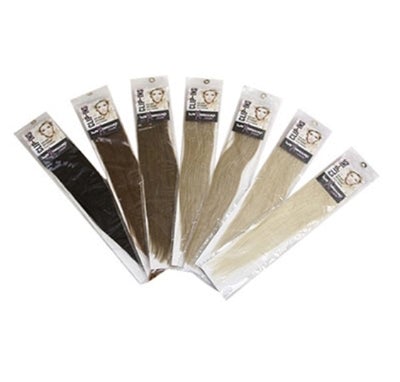

Benefits of Nail-Tip / U-Tip Hair Extensions: Are Pre-Bonded Extensions Right for You?
Nail-Tip hair extensions, also known as U-Tip or pre-bonded hair extensions, are one of the most established professional extension methods for adding length, volume and colour.
Each extension strand has a pre-formed keratin attachment at the top. During professional fitting, the keratin is softened using a specialist heat connector and shaped around a suitable section of natural hair.
Because Nail-Tips are fitted strand by strand, technicians can control where individual extensions are positioned and how different colours are distributed throughout the hair.
✔ Individual strand application
✔ Pre-bonded keratin attachment
✔ Professionally fitted using controlled heat
✔ Useful for adding length and volume
✔ Multiple shades can be blended together
✔ Suitable for a wide range of hairstyles when professionally assessed
What Are Nail-Tip / U-Tip Hair Extensions?
Nail-Tips are individual human hair extension strands supplied with a pre-formed keratin bond.
They are sometimes called:
- Nail-Tip extensions
- U-Tip extensions
- Pre-bonded extensions
- Fusion hair extensions
- Keratin bond extensions
During professional application, the keratin attachment is softened using a specialist heat connector before being formed around an appropriately sized section of natural hair.
This differs from ring-based methods such as Stick-Tips and Nano-Tips, which use Micro Rings or Nano Rings rather than a keratin attachment.
What Are the Main Benefits of Nail-Tip Hair Extensions?
Nail-Tips remain popular because they offer a combination of individual placement, secure attachment and styling flexibility.
The main potential benefits include:
- Precise strand-by-strand placement
- Natural movement through the hair
- Strong colour-blending possibilities
- Ability to add both length and volume
- No visible tape panels or ring attachments
- Flexible positioning across suitable areas of the head
Whether these advantages make Nail-Tips the right option depends on the condition and density of the natural hair, the desired result and the client's willingness to follow the required aftercare.
1. Individual Strand Placement
One of the biggest advantages of Nail-Tips is that every extension is fitted separately.
This gives the technician control over:
- Placement
- Density
- Colour distribution
- Spacing
- Blending around different areas of the head
This can be particularly useful where the client wants more volume in certain areas or where several extension shades need to be blended together.
2. Nail-Tips Can Add Both Length and Volume
Nail-Tip extensions are not only for dramatically longer hair.
They can also be used to add:
- Fuller ends
- More density through the sides
- Extra body
- Subtle additional length
The amount of extension hair used should be based on the client's natural hair rather than a fixed strand count.
3. Natural Movement Through the Hair
Because Nail-Tips are fitted as individual strands, the hair can move independently rather than being attached in wider panels.
This can create natural-looking movement when the extensions are worn:
- Straight
- Wavy
- Curly
- In selected upstyles
Good placement and blending remain essential to achieving a natural finish.
4. Excellent Colour-Blending Potential
Nail-Tip extensions are particularly useful for clients with multi-tonal hair.
Different colours can be distributed strand by strand to create:
- Highlights
- Lowlights
- Balayage-inspired effects
- Brunette-to-blonde blends
- Warm and cool blonde combinations
- Copper, red or vibrant colour accents
Multi-tonal natural hair often looks better with several extension shades rather than trying to match everything with one colour.
5. No Tape Panels
Nail-Tips use individual keratin attachments rather than adhesive tape panels.
Some clients prefer this because there are no wide Tape-In sections through the hair.
However, this does not make one method universally better than another. Tape-Ins and Nail-Tips simply use different attachment systems and maintenance routines.
6. No Rings or Beads
Unlike Stick-Tip and Nano-Tip methods, Nail-Tips do not use Micro Rings or Nano Rings.
The attachment is formed from the pre-bonded keratin at the top of the extension strand.
This can appeal to clients who prefer a bonded method rather than a ring-based fitting.
7. Useful for Creating Multi-Tonal Transformations
Because extensions are selected individually, a technician can control exactly where different shades appear.
For example, one fitting might combine:
- A darker base shade
- One or two lighter highlight shades
- A brighter shade through the ends
This flexibility makes Nail-Tips useful for creating dimensional colour without relying on one solid extension shade.
8. Available in Different Lengths and Strand Weights
HairXtensions Nail-Tip extensions are available across several lengths and strand-weight options, including 14, 18, 20 and 22-inch ranges. :chatgpt-content-reference{index="1"}
This allows a professional technician to choose a combination that better suits the client's natural hair and desired finish.
Heavier strands are not automatically better. Strand weight should always be appropriate for the natural hair section supporting it.
Are Nail-Tip Extensions Suitable for Fine Hair?
They may be suitable for some clients with finer hair, but they are not automatically appropriate for everyone.
A professional should assess:
- Hair density
- Hair strength
- Hair condition
- Appropriate strand weight
- Attachment placement
If the natural hair is very fragile, actively thinning or unable to support the chosen extension weight, another option may be more appropriate.
Are Nail-Tip Extensions Suitable for Thick Hair?
Nail-Tips can also work well with thicker natural hair.
Individual strands allow the technician to distribute extension hair throughout the head and add enough density to blend with fuller natural lengths.
The total amount of hair required depends on the client's starting density and desired result.
Can Nail-Tip Extensions Be Used on Short Hair?
Possibly, provided there is enough natural hair to conceal the attachments and blend the extension lengths.
Short or blunt hair can be more challenging because the natural ends may create a visible line.
A moderate extension length and professional cutting can often produce a more natural transition than jumping immediately to extremely long hair.
How Are Nail-Tip Extensions Fitted?
Nail-Tips are professionally applied using the heat-fusion method.
The general process involves:
- Preparing clean, dry natural hair.
- Selecting an appropriately sized section.
- Positioning the pre-bonded extension strand.
- Softening the keratin attachment with a professional heat connector.
- Removing the heat source.
- Forming the softened bond neatly around the natural hair.
- Allowing the attachment to cool and set.
Application should be carried out by somebody appropriately trained in the extension system being used.
👉 Read Our Nail-Tip / U-Tip Fitting Guide
Do Nail-Tip Extensions Damage Natural Hair?
No professional extension method should be described as completely risk-free.
The condition of the natural hair can be affected by factors such as:
- Incorrect strand weight
- Poor sectioning
- Excessive tension
- Incorrect heat use
- Poor aftercare
- Leaving attachments in beyond appropriate maintenance
- Incorrect removal
Professional assessment, fitting, aftercare and removal are therefore important parts of the process.
Does the Heat Connector Touch the Natural Hair?
A professional heat connector is used to soften the keratin attachment so it can be formed around the selected natural hair section.
It should be used according to the manufacturer's instructions and with appropriate professional technique.
More heat is not better. The objective is controlled softening of the keratin rather than unnecessary heating of the surrounding hair.
Are Keratin Bonds the Same as Glue?
Nail-Tip extensions use a prepared keratin-based attachment designed for professional fusion application.
They should not be treated like ordinary household glue or general-purpose adhesive.
The fitting system, heat connector and removal products should all be compatible with the professional extension method being used.
Nail-Tip vs Stick-Tip Hair Extensions
Both methods use individual extension strands, but their attachment systems are different.
Nail-Tip / U-Tip:
- Pre-bonded keratin attachment
- Professional heat used during fitting
- No Micro Ring attachment
Stick-Tip / I-Tip:
- Individual Stick-Tip strand
- Secured using a Micro Ring or compatible bead
- No fusion heat required
The better option depends on the client's hair, lifestyle and preferred maintenance routine.
Nail-Tip vs Nano-Tip Hair Extensions
Nano-Tips use very small Nano Rings rather than keratin bonds.
The main differences are:
- Nail-Tip: Keratin bond + heat-fusion fitting
- Nano-Tip: Small Nano Ring attachment
Both allow strand-by-strand placement, but they use very different fitting and removal techniques.
Nail-Tip vs Tape-In Hair Extensions
Tape-Ins use flat adhesive panels, while Nail-Tips are fitted individually.
Tape-Ins can add hair across a wider section at once, while Nail-Tips provide more individual control over placement.
Neither is universally better; each method has different benefits and maintenance requirements.
Nail-Tip vs Hair Wefts
Hair wefts add hair across rows, whereas Nail-Tips distribute individual extension strands throughout the fitting area.
This means Nail-Tips can offer more precise colour and strand placement, while wefts can add significant density across wider areas.
Can Nail-Tip Extensions Be Curled and Straightened?
Human hair Nail-Tip extensions can generally be curled, straightened and blow-dried with appropriate care.
Use heat protection and avoid applying concentrated direct heat onto the keratin bonds.
The lowest effective styling temperature is usually preferable to unnecessarily high heat.
Can You Colour Nail-Tip Hair Extensions?
Colouring extension hair after purchase can produce unpredictable results, particularly when lightening or bleaching.
It is generally better to choose the closest available extension shade or blend several compatible shades during fitting.
Always follow product-specific colour guidance before chemically altering extension hair.
How Long Do Nail-Tip Hair Extensions Last?
The wearing period depends on factors such as natural hair growth, fitting quality, strand weight, aftercare and lifestyle.
HairXtensions describes its Nail-Tip range as typically lasting around 2–3 months with appropriate care, but individual wear can vary. :chatgpt-content-reference{index="2"}
They should not simply be left in indefinitely because the attachments move further away from the scalp as the natural hair grows.
Do Nail-Tip Extensions Need Maintenance?
Yes.
As the hair grows, the attachments move away from the scalp.
The technician may need to assess:
- Bond position
- Root tangling
- Natural shed hairs
- Overall extension condition
- Whether removal is due
How Are Nail-Tip Extensions Removed?
Nail-Tips should be professionally removed using the correct keratin bond-removal process.
The bond is carefully broken down using suitable removal tools and remover before the extension strand is gently released.
Keratin bonds should never simply be pulled, cut or forced from the natural hair.
👉 Read Our Nail-Tip / U-Tip Removal Guide
Can Nail-Tip Extensions Be Reused?
Nail-Tips are supplied with a pre-formed keratin attachment that is altered during fitting and broken down during removal.
Any potential reuse would require professional re-tipping and depends on the condition of the extension hair.
Clients should not assume removed strands can simply be fitted again using the original bond.
How to Wash Nail-Tip Extensions
Use a gentle washing technique and avoid aggressive rubbing around the bonds.
Useful aftercare habits include:
- Washing with the head upright
- Rinsing shampoo thoroughly
- Applying conditioner mainly through the mid-lengths and ends
- Keeping heavy oils and rich treatments away from the bonds
- Drying the attachment areas thoroughly
How to Brush Nail-Tip Extensions
Detangle from the ends upwards and support the hair while brushing.
Work carefully around the bond areas rather than pulling aggressively through them.
👉 Read Our Hair Extension Brush & Comb Guide
Can You Use Conditioner on Nail-Tip Extensions?
Yes, but concentrate conditioner mainly on the mid-lengths and ends.
Avoid heavily coating the keratin attachment areas with conditioner, oils or rich hair masks.
Can You Use Hair Masks on Nail-Tip Extensions?
Yes. Suitable masks can generally be used through the lengths and ends when the extension hair needs extra conditioning.
Keep rich treatments away from the bonds.
👉 Read Our Hair Extension Hair Mask Guide
Who Might Choose Nail-Tip Hair Extensions?
Nail-Tips may appeal to someone looking for:
- A professionally fitted strand-by-strand method
- Additional length
- More volume
- Precise colour blending
- Keratin rather than ring attachments
- A method that allows individual placement
Who May Not Be Suitable for Nail-Tips?
A professional consultation may identify reasons why Nail-Tips are not appropriate.
These can include:
- Very fragile natural hair
- Active thinning or excessive shedding
- Insufficient density to support or conceal attachments
- Scalp problems requiring professional assessment
- An inability to follow the required maintenance routine
No extension method should be fitted simply because a client likes the finished look.
Are Nail-Tip Extensions Worth Considering?
Nail-Tips can be an excellent option for suitable clients who want individual strand placement, extra length, additional volume and flexible colour blending.
Their biggest strength is not that they are automatically better than every other method, but that they offer a different combination of attachment type, placement control and finished movement.
The best extension method should always be chosen according to the client's natural hair, desired result and maintenance preferences.
✔ Individual strand placement
✔ Added length and volume
✔ Multi-tonal colour blending
✔ A keratin-bond method
✔ A professionally fitted semi-permanent extension option
Shop Nail-Tip / U-Tip Hair Extensions
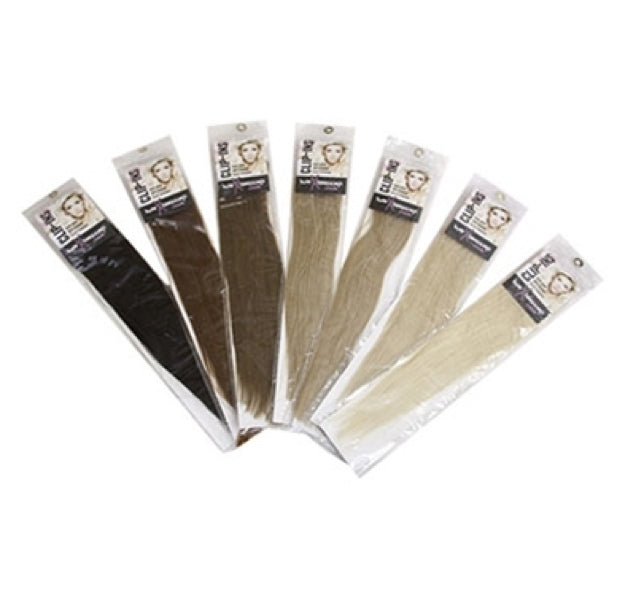
HairXtensions Nail-Tip / U-Tip extensions are available in a range of lengths, strand weights and colours for professional fitting.
👉 Shop Nail-Tip / U-Tip Hair Extensions
👉 View the HairXtensions Hair Extension Colour Chart
Learn How Nail-Tip Extensions Are Fitted
If you are a professional or want to understand the application process in more detail, our dedicated fitting guide covers preparation, sectioning, heat application, bond formation and common fitting mistakes.
👉 Read the Nail-Tip / U-Tip Fitting Guide
Compare Hair Extension Methods
If you are still deciding between Nail-Tips, Stick-Tips, Nano-Tips, Tape-Ins and Hair Wefts, our comparison guide explains how the main attachment methods differ.
👉 Compare Hair Extension Methods
Hair Extension Aftercare
Correct washing, brushing, drying, styling and professional removal all play an important role in looking after fitted Nail-Tip extensions.