


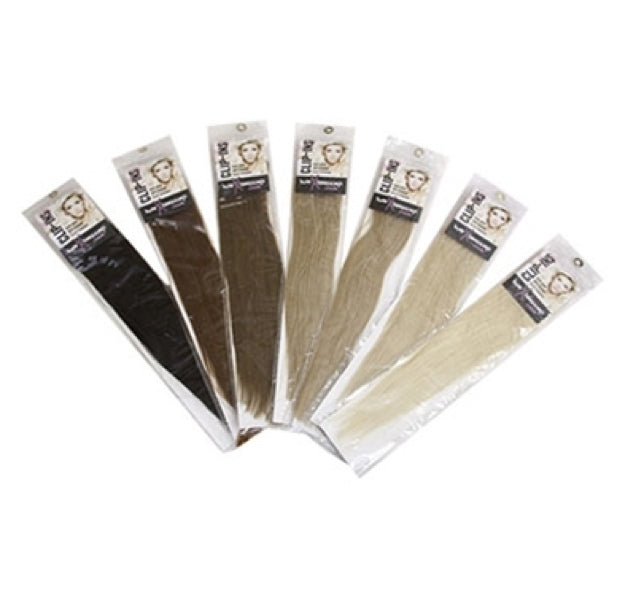
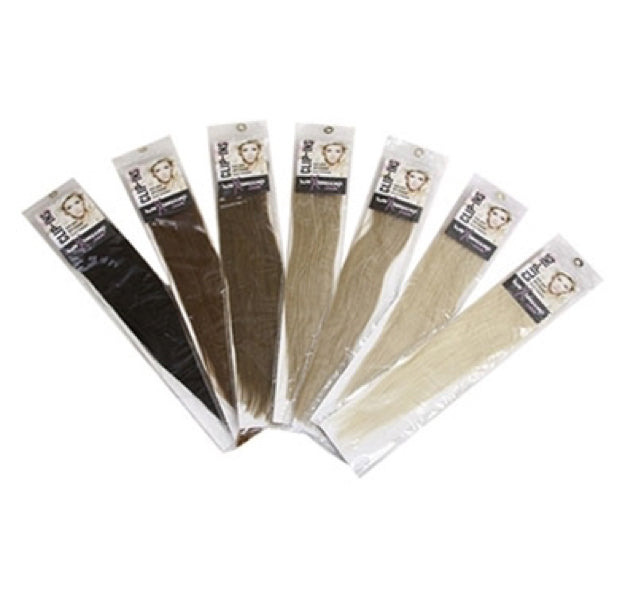

Clip-In Hair Extensions: Lengths, Weights, Fitting, Blending & Care Guide
Clip-In hair extensions are one of the simplest ways to add temporary length, volume and extra styling hair without committing to a professionally fitted extension method.
HairX Clip-In sets use multiple wefts with clips already attached, allowing the pieces to be fitted when wanted and removed again after wear. There is no keratin bond, Nano Ring, Micro Ring or Tape-In adhesive left attached to the natural hair between uses.
This guide explains the current HairX Clip-In range, including the differences between 14, 18, 20 and 22 inch sets, how much hair is included, how to fit the seven pieces, how to blend them with your natural hair and how to care for them between wears.
✔ 7-piece full-head sets
✔ 100% human Remy-graded hair
✔ Pre-attached clips
✔ 14" / approximately 36cm — approximately 80g
✔ 18" / approximately 46cm — approximately 90g
✔ 20" / approximately 51cm — approximately 100g
✔ 22" / approximately 56cm — approximately 115g
✔ Natural and Ombre shade options
✔ Removable after wear
✔ No heat, adhesive or rings required for application
What Are Clip-In Hair Extensions?
Clip-In hair extensions are removable hair extension wefts with small clips attached along the top.
The clips open and close so each piece can be secured into sections of the natural hair and removed again when the extensions are no longer needed.
Are Clip-In Extensions Permanent?
No.
Clip-Ins are designed as a temporary, removable extension method.
Do Clip-Ins Need Salon Fitting?
Not usually.
They are designed so they can generally be applied and removed by the wearer once the correct placement technique is understood.
Do Clip-Ins Use Glue?
No.
Standard HairX Clip-In sets use pre-attached clips rather than adhesive.
Do Clip-Ins Use Rings?
No.
They do not use Nano Rings or Micro Rings.
Do Clip-Ins Need Heat to Fit?
No.
No heat-fusion tool is required to attach them to the natural hair.
How Many Pieces Are in a HairX Clip-In Set?
Current HairX full-head Clip-In sets contain seven separate wefts.
Using several pieces rather than one large hairpiece allows the extension hair to be distributed across different areas of the head.
Why Are There Different-Width Pieces?
The wider wefts are generally positioned across the back of the head, while smaller pieces can be used around the sides where additional blending or volume is needed.
What Lengths Are Available?
The current standard HairX Clip-In range includes:
- 14 inches / approximately 36cm
- 18 inches / approximately 46cm
- 20 inches / approximately 51cm
- 22 inches / approximately 56cm
How Much Hair Is in a 14 Inch Clip-In Set?
The current 14 inch full-head Clip-In set contains approximately 80g of human hair across seven pieces.
How Much Hair Is in an 18 Inch Clip-In Set?
The current 18 inch set contains approximately 90g of hair across seven pieces.
How Much Hair Is in a 20 Inch Clip-In Set?
The current 20 inch set contains approximately 100g of hair across seven pieces.
How Much Hair Is in a 22 Inch Clip-In Set?
The current 22 inch set contains approximately 115g of hair across seven pieces.
Why Does the Weight Increase with Length?
Longer extension sets need more hair to maintain suitable coverage through the additional length.
Does a Heavier Set Automatically Look Better?
No.
The most suitable weight depends on your natural-hair density, starting length, desired volume and how much extension hair your natural hair can comfortably conceal.
Which Clip-In Length Should You Choose?
The right length depends on your natural hair and the finished result you want.
- 14" — shorter, more subtle change with added body
- 18" — versatile medium-long option
- 20" — noticeable longer transformation
- 22" — longest standard Clip-In option in the current range
What Are 14 Inch Clip-Ins Best For?
14 inch Clip-Ins are useful where the main goal is extra body, density or a moderate increase in length.
What Are 18 Inch Clip-Ins Best For?
18 inches offers a medium-long result that can add noticeable length while remaining more moderate than the 20 and 22 inch options.
What Are 20 Inch Clip-Ins Best For?
20 inches provides a longer finished look and can create a more noticeable transformation.
What Are 22 Inch Clip-Ins Best For?
22 inches is the longest standard Clip-In length in the current HairX range and is suited to clients wanting a more dramatic increase in length.
Where Will 14, 18, 20 or 22 Inches Reach?
Extension length does not finish at exactly the same point on everybody.
Your height, torso length, natural hair length and where the Clip-In pieces are positioned all affect where the ends sit.
Should You Measure Before Ordering?
Yes.
Using a flexible tape measure against your own hair can help you estimate where each length may finish.
Can Clip-Ins Be Used Mainly for Volume?
Yes.
Clip-Ins do not have to be used purely for additional length.
A shorter set can add density and body while keeping the overall length closer to the natural hairstyle.
Can Clip-Ins Add Both Length and Volume?
Yes.
The amount of each depends on the chosen set and the natural hair.
Can Clip-Ins Be Used for Occasional Wear?
Yes.
They are particularly useful when you want additional hair for selected days, evenings or events rather than continuously fitted extensions.
Can Clip-Ins Be Worn Every Day?
They can be worn regularly, but frequent wear should still be comfortable and gentle on the natural hair.
Avoid repeatedly creating unnecessary tension in exactly the same areas.
Do You Have to Use All Seven Pieces?
No.
You can use only the pieces needed for your desired result, provided the finished style remains balanced and the natural hair can cover the tracks and clips.
Can Fine Hair Use Fewer Pieces?
Potentially.
Fine or lower-density hair may provide less coverage over the wefts, so using only the pieces that can be comfortably concealed may be more appropriate.
Can Thick Hair Need More Extension Density?
Potentially.
Very thick or blunt natural hair can require enough extension hair to prevent the added lengths from appearing thin by comparison.
Are Clip-Ins Suitable for Fine Hair?
Potentially, but placement matters.
Fine hair may provide less grip and less coverage over the tracks, so larger pieces should not be positioned where the natural hair cannot comfortably conceal them.
Are Clip-Ins Suitable for Thick Hair?
Yes, potentially.
The main challenge is often achieving enough extension density to blend with thicker natural hair.
Can Clip-Ins Be Used on Short Hair?
Potentially.
Shorter or blunt natural hair generally needs more careful placement and blending because the difference between the natural haircut and extension length can be more obvious.
Can Clip-Ins Be Used with a Bob?
Yes, potentially.
A blunt bob may need enough extension density and careful styling to soften the transition into the longer lengths.
How Do You Fit Clip-In Hair Extensions?
- Make sure the natural hair is dry and gently detangled.
- Lay out the seven pieces by width.
- Begin towards the lower back of the head.
- Create a clean horizontal section.
- Clip the remaining natural hair out of the way.
- Fully open each clip on the first weft.
- Position the weft along the section.
- Close each clip once the placement feels secure and comfortable.
- Create another section above and repeat.
- Use smaller pieces around the sides where needed.
- Check that natural hair covers the tracks and clips.
- Blend and style the natural hair and extensions together.
Where Should the Widest Clip-In Pieces Go?
The wider pieces generally work best across the back of the head where there is enough natural hair above them for coverage.
Where Should the Smaller Clip-In Pieces Go?
Smaller pieces can be positioned around the sides where additional volume or blending is needed.
Should Clip-Ins Sit Right Against the Scalp?
No.
The clips should feel secure without pulling tightly or creating discomfort.
Should Clip-In Extensions Hurt?
No.
If a clip feels tight, pinches or pulls, remove the piece and reposition it.
Can Clip-Ins Be Positioned Too High?
Yes.
Pieces placed too close to the crown, parting or exposed hairline may be harder to conceal.
Can Clip-Ins Be Positioned Too Low?
They can be placed too low if there is not enough natural hair below or around the weft to create the intended blend.
Why Is Placement Important?
Good placement affects:
- Comfort
- Clip coverage
- Volume distribution
- Blending
- Styling flexibility
How Do You Fit Clip-Ins in Fine Hair?
Fine hair may need more conservative placement.
- Keep upper wefts lower if more coverage is needed.
- Avoid placing large pieces in very sparse areas.
- Use only the pieces required.
- Check that each clip feels comfortable.
- Use mirrors to check the back and sides before finishing.
Should You Backcomb Hair Before Fitting Clip-Ins?
Heavy repeated backcombing is not necessary and can create unnecessary tangling.
If a small amount of controlled root texture is genuinely required for extra grip, use it conservatively.
How Do You Make Clip-Ins Blend?
Good blending starts with four things:
- Correct colour
- Appropriate length
- Enough extension density
- Balanced placement
Why Is Colour Matching Important?
A close colour match helps the natural hair and extension hair appear more consistent through the lengths.
Should Clip-Ins Match the Roots?
Not necessarily.
The natural mid-lengths and ends are usually more important because these are the areas that overlap most visibly with the extensions.
Can More Than One Clip-In Shade Be Used?
Potentially.
Where natural hair is strongly multi-tonal, combining compatible shades can sometimes create a more dimensional blend.
Are Ombre Clip-Ins Available?
Yes.
The current HairX Clip-In range includes Ombre options in addition to natural shades.
Why Should You Check the Colour Before Opening?
Clip-In hair is subject to hygiene-related return restrictions once the relevant packaging or golden hygiene ribbon has been removed.
Check the shade, length and product carefully before opening or using the set.
Can Clip-In Extensions Be Returned After Opening?
For a normal change-of-mind return, opened or used Clip-In hair is restricted for hygiene reasons.
Always check the current returns policy for full details, including faulty products and statutory rights.
Can Clip-Ins Blend with Blunt Hair?
Yes, but blunt natural ends can be more difficult to disguise.
Styling and careful placement can help, and in some cases professional shaping may improve the transition.
Can You Cut Clip-In Extensions?
Human hair Clip-Ins can be professionally trimmed or shaped if required.
Remember that cutting is permanent, so make sure the chosen length is suitable first.
Can You Layer Clip-In Extensions?
Yes.
Professional layering can help the extension hair integrate with a layered natural haircut.
Can Clip-Ins Be Worn Straight?
Yes.
Human hair Clip-In extensions can generally be straightened carefully using suitable heat protection.
Can Clip-Ins Be Curled?
Yes.
Use suitable heat protection and keep heated tools away from the clips and sewn weft tracks.
Can Clip-Ins Be Waved?
Yes.
Styling the natural hair and extensions together can help create a more consistent texture.
Should Heat Protection Be Used?
Yes.
Use suitable thermal protection before significant heat styling.
What Heat Setting Should You Use?
Use the lowest effective temperature needed for the style.
Does Human Hair Mean You Can Use Unlimited Heat?
No.
Frequent or excessive heat can contribute to dryness and wear even on human hair extensions.
Can Straighteners Touch the Clips?
No.
Keep hot plates away from the clips and sewn attachment tracks.
Can Curling Tongs Touch the Clips?
No.
Apply heat through the extension lengths rather than directly over the attachment hardware.
Can Clip-Ins Be Styled Before Fitting?
Yes.
Removable extensions can often be styled separately before being fitted, which can make it easier to control the hairpiece and keep heat away from the clips.
Can Clip-Ins Be Styled While Wearing Them?
Yes, where the hair is compatible with the chosen styling method.
Take care not to pull against the clips.
Can Clip-Ins Be Worn in a Ponytail?
Potentially.
Placement may need to be adjusted so the tracks remain covered and do not pull when the natural hair is lifted.
Can Clip-Ins Be Worn in an Updo?
Potentially.
The individual pieces can sometimes be positioned to suit the planned hairstyle, although clip visibility depends on natural-hair coverage.
Are Clip-Ins Invisible?
No.
When properly positioned they can be concealed under sufficient natural hair, but the clips and tracks are not literally invisible.
Can Clip-Ins Slip?
They can move if they are positioned poorly, the natural hair offers little grip or the hairstyle places excessive tension on the clips.
Should You Force a Clip into the Hair?
No.
Make sure each snap clip is fully open before positioning it.
Should You Pull Clip-Ins Out?
No.
Open every clip completely before lifting the piece away from the natural hair.
How Do You Remove Clip-In Extensions?
- Locate the uppermost or side piece.
- Support the natural hair nearby.
- Fully open every clip on the weft.
- Gently lift the piece away.
- Continue one piece at a time.
- Brush the extensions gently before storing them.
Should Clip-Ins Be Removed Before Bed?
Yes.
Clip-In extensions should normally be removed before sleeping.
Why Should You Remove Clip-Ins Before Sleeping?
Removing them avoids unnecessary friction, tangling, pressure on the clips and pulling on the natural hair overnight.
Should Clip-Ins Be Removed Before Showering?
Yes.
Wash Clip-In extensions separately rather than wearing them in the shower.
Should Clip-Ins Be Removed Before Swimming?
Yes.
Remove them before swimming in pools or sea water.
Should Clip-Ins Be Removed Before Exercise?
Normally, yes.
Removing them avoids unnecessary movement, sweat, friction and pulling during workouts.
Can You Wear Clip-Ins in the Rain?
Light incidental moisture is different from deliberately soaking them, but if the extensions become wet they should be gently detangled and dried fully before storage.
How Often Should Clip-Ins Be Washed?
They do not normally need washing after every wear.
Wash them when product build-up, odour or general use makes cleaning necessary.
How Do You Wash Clip-In Extensions?
- Remove the complete set from your hair.
- Gently detangle each piece.
- Use lukewarm water.
- Apply suitable hair extension shampoo gently.
- Avoid scrubbing or twisting the hair.
- Rinse thoroughly.
- Apply conditioner mainly through the mid-lengths and ends.
- Rinse again.
- Gently squeeze out excess water.
- Blot with a towel rather than rubbing.
- Allow both the hair and clips to dry completely.
Should Clip-Ins Be Washed While Wearing Them?
No.
Remove the set and wash it separately.
Can Conditioner Be Used on Clip-Ins?
Yes.
Apply suitable conditioner mainly through the extension mid-lengths and ends.
Can Hair Masks Be Used?
Yes, where suitable for human hair extensions.
Avoid overloading the hair with heavy products.
Can Hair Oil Be Used?
Yes, sparingly through suitable lengths and ends.
Can Too Much Product Weigh Down Clip-Ins?
Yes.
Heavy product build-up can reduce movement and make the hair look coated or greasy.
How Should Clip-Ins Be Brushed?
Start at the ends and work gradually upwards.
Support the piece securely rather than pulling against the sewn weft or clips.
Can Clip-Ins Tangle?
Yes.
Human hair extensions can tangle through friction, styling, storage and normal wear.
How Do You Prevent Unnecessary Tangling?
Brush them gently after wear, avoid storing them in a tangled bundle and make sure they are completely dry before putting them away.
Can You Brush Clip-Ins While Wearing Them?
Yes.
Support the natural hair and extension piece so you are not pulling heavily against the clips.
Can Clip-Ins Be Blow-Dried?
Yes.
Use suitable heat protection and controlled heat.
Can Clip-Ins Air-Dry?
Yes.
Make sure both the extension hair and the clips are completely dry before storage.
Can You Store Clip-Ins Damp?
No.
Damp storage can encourage tangling and may affect both the extension hair and attachment hardware.
How Should Clip-In Extensions Be Stored?
- Make sure they are completely dry.
- Gently detangle from the ends upwards.
- Close the clips.
- Lay or hang the extensions neatly.
- Store them somewhere clean and dry.
Should the Clips Be Closed During Storage?
Yes.
Closing them can help prevent the open clips catching on other pieces.
Can Clip-Ins Be Stored in a Bag?
Yes.
A suitable protective hair extension storage bag can help keep the pieces clean and organised.
Can Clip-Ins Be Hung Up?
Yes.
A suitable extension hanger can help keep longer pieces straight and organised between wears.
Can Clip-In Hair Be Coloured?
We recommend choosing the closest shade before wearing the set rather than relying on additional chemical processing afterwards.
Can Clip-Ins Be Bleached?
Further bleaching or lightening is best avoided unless the specific extension product is designed and approved for it.
Can Clip-Ins Be Toned?
Use caution.
Processed extension hair can react differently from natural hair and may take colour unevenly.
Can Purple Shampoo Be Used?
Colour-depositing shampoos can alter processed blonde extension shades and may take unevenly, so use caution and follow the guidance for the specific product.
Can Hard Water Affect Clip-Ins?
Yes.
Mineral build-up can affect softness, shine, manageability and colour.
Can Chlorine Affect Clip-Ins?
Yes.
This is one reason removable Clip-Ins are best taken out before swimming.
Can Sunlight Affect Clip-In Colour?
Yes.
Repeated UV exposure can contribute to dryness and colour change over time.
How Long Do Clip-In Extensions Last?
There is no guaranteed lifespan that applies to every wearer.
The condition of the extension hair depends on factors including:
- How frequently the set is worn
- How often it is washed
- Heat styling
- Brushing
- Storage
- Products used
- Water quality
- UV exposure
Does Wearing Clip-Ins Less Often Help?
Less frequent wear can reduce cumulative brushing, styling and environmental exposure, but how the hair is handled while worn and stored still matters.
When Should Clip-In Extensions Be Replaced?
Replacement may be appropriate when the hair becomes:
- Severely dry
- Persistently tangled
- Very thin through the ends
- Heavily heat damaged
- Significantly faded or discoloured
- Damaged around the weft or clips
Do Clip-Ins Damage Natural Hair?
Clip-Ins avoid leaving a permanent attachment in the hair, but poor placement, overly heavy pieces, repeated tension or rough removal can still stress natural hair.
Are Clip-Ins Damage-Free?
No hair extension method should be described as completely damage-free.
Gentle placement, appropriate weight and careful removal still matter.
Does No Glue Mean No Risk?
No.
A clip is still a mechanical attachment and can create tension if positioned poorly or pulled against repeatedly.
Should Clip-Ins Feel Heavy?
The set should feel secure and manageable.
If a piece feels uncomfortable or pulls strongly, reposition it or use fewer pieces.
Can You Move the Clips to Different Areas?
Yes.
You do not need to use exactly the same placement every time, provided the pieces remain comfortable and well covered.
Should You Use the Same Sections Every Day?
Not necessarily.
Varying placement slightly where practical can help avoid repeatedly loading exactly the same natural-hair areas.
Clip-Ins vs Fitted Extensions: What Is the Difference?
The main difference is whether the extension remains attached between wears.
Clip-Ins are removable, while professionally fitted methods such as Nano-Tips, Tape-Ins, Nail-Tips and fitted Hair Wefts remain attached until maintenance or removal.
Do Clip-Ins Need Maintenance Appointments?
No grow-out maintenance appointment is required because they are removed after wear.
Are Clip-Ins Better Than Nano Tips?
Not universally.
They serve different needs.
Clip-Ins suit people who want removable additional hair, while Nano Tips are professionally fitted individual strands designed to remain attached between appointments.
Are Clip-Ins Better Than Tape-Ins?
Again, neither is universally better.
Tape-Ins are a professionally fitted adhesive-panel method, while Clip-Ins are removable and can generally be applied at home.
Are Clip-Ins Better Than a Hair Weft?
They are different.
Hair Wefts can be professionally installed as a fitted system, whereas Clip-In sets use removable weft pieces with attached clips.
Are Clip-Ins Good for Weddings?
They can be useful for weddings and special occasions where additional length or volume is wanted temporarily.
Are Clip-Ins Good for Nights Out?
Yes.
They can be fitted for the occasion and removed afterwards.
Are Clip-Ins Good for Photoshoots?
Yes.
They can add temporary density or length without committing to a fitted method.
Can Clip-Ins Be Used for Everyday Hair?
Yes, provided they remain comfortable and are fitted and removed carefully.
Can You Travel with Clip-Ins?
Yes.
Store them neatly and protect the hair and clips during travel.
Do Clip-Ins Need Professional Removal?
No.
They are designed so the wearer can open the clips and remove each piece gently.
Do Clip-Ins Need Special Tools?
No professional fitting tool is normally required.
A tail comb, sectioning clips, suitable brush and mirror can make application easier.
Do Clip-Ins Need a Hair Extension Brush?
An extension-friendly brush can make gentle detangling easier, but whichever tool you use should be appropriate for human hair extensions and should not be forced through knots.
How Do You Know Which Clip-In Set to Buy?
Consider four main factors:
- Length
- Set weight
- Natural-hair density
- Colour
Should You Choose Length Before Colour?
Both matter, but colour should be checked carefully before the set is opened because of hygiene-related return restrictions.
Does Set Weight Matter as Much as Length?
Yes.
A longer extension that does not provide enough density for your natural hair may be harder to blend.
What If Your Hair Is Very Thick?
Thick natural hair may require careful consideration of whether one standard set provides enough density for the desired result.
What If Your Hair Is Very Fine?
Fine hair may not need every piece and may require lower placement to maintain coverage.
Should You Buy the Longest Set Just in Case?
No.
Choose the length you actually want rather than assuming longer is always better.
Can Longer Clip-Ins Be Cut Shorter?
Yes, but cutting is permanent.
Choosing the closest suitable length initially is preferable where possible.
Clip-In Buying Checklist
✔ Decide whether you mainly want length, volume or both
✔ Compare 14", 18", 20" and 22" lengths
✔ Consider the matching set weight
✔ Think about your natural-hair density
✔ Check whether your natural haircut is blunt or layered
✔ Colour match the mid-lengths and ends
✔ Check the colour before removing the hygiene protection
✔ Decide whether you will wear all seven pieces or only selected wefts
✔ Make sure you understand fitting, removal and storage
✔ Use suitable aftercare and heat protection
Common Clip-In Mistakes to Avoid
✖ Choosing a length without considering natural-hair density
✖ Assuming every person needs all seven pieces
✖ Placing large wefts where there is not enough hair for coverage
✖ Positioning clips so tightly that they pull
✖ Forcing closed clips into the natural hair
✖ Pulling wefts out before opening every clip
✖ Sleeping in Clip-In extensions
✖ Showering or swimming while wearing them
✖ Using excessive heat repeatedly
✖ Storing extensions while damp
✖ Removing the hygiene protection before checking the shade
Shop Clip-In Hair Extensions
Explore the complete HairX Clip-In collection across current lengths, weights and available colours.
Shop 14 Inch Clip-In Hair Extensions
The current 14 inch / approximately 36cm Clip-In sets contain seven pieces and approximately 80g of human hair.
Shop 14 Inch Clip-In Hair Extensions
Shop 18 Inch Clip-In Hair Extensions
The current 18 inch / approximately 46cm sets contain seven pieces and approximately 90g of human hair.
Shop 18 Inch Clip-In Hair Extensions
Shop 20 Inch Clip-In Hair Extensions
The current 20 inch / approximately 51cm sets contain seven pieces and approximately 100g of human hair.
Shop 20 Inch Clip-In Hair Extensions
Shop 22 Inch Clip-In Hair Extensions
The current 22 inch / approximately 56cm sets contain seven pieces and approximately 115g of human hair.
Shop 22 Inch Clip-In Hair Extensions
Read Our Clip-In Fitting & Aftercare Guide
For detailed application instructions, including placement of the seven wefts, fine-hair fitting, removal, washing, heat styling and storage, read our dedicated Clip-In tutorial.
Read Our Clip-In Hair Extensions Fitting & Aftercare Guide
Read Our Hair Extension Length Guide
Compare 14, 18, 20 and 22 inch lengths and see how height, natural-hair length and desired result can influence your choice.
Read Our Hair Extension Length Guide
Read Our Hair Extension Aftercare Guide
Learn more about brushing, washing, heat styling and caring for removable and professionally fitted extension methods.
Read Our Complete Hair Extension Aftercare Guide
Final Thoughts
HairX Clip-In extensions provide a removable way to add temporary length, volume and styling flexibility without leaving bonds, rings or adhesive attached to the natural hair between wears.
The current range includes 14", 18", 20" and 22" sets, with approximately 80g, 90g, 100g and 115g of hair respectively. Each full-head set contains seven separate Clip-In pieces, allowing the extension hair to be distributed across the back and sides according to the natural hair and desired result.
The best set is not automatically the longest or heaviest. Natural-hair density, existing haircut, desired length, volume and colour all affect which option will blend most effectively.
Correct placement is equally important. The clips should feel secure without pulling, the natural hair should cover the tracks, and there is no requirement to use every piece if your hair does not need or comfortably conceal them.
Because Clip-Ins are removable, they should normally be taken out before sleeping, showering, swimming and exercising. Gentle washing, controlled heat styling and careful dry storage will also help maintain the extension hair between wears.