


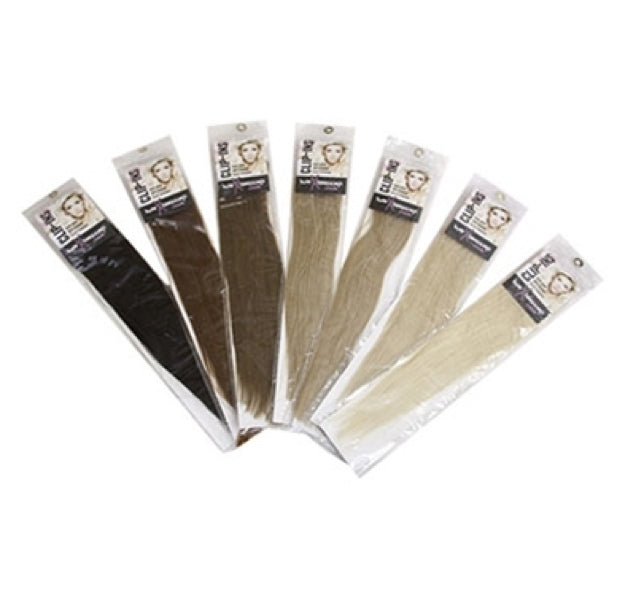
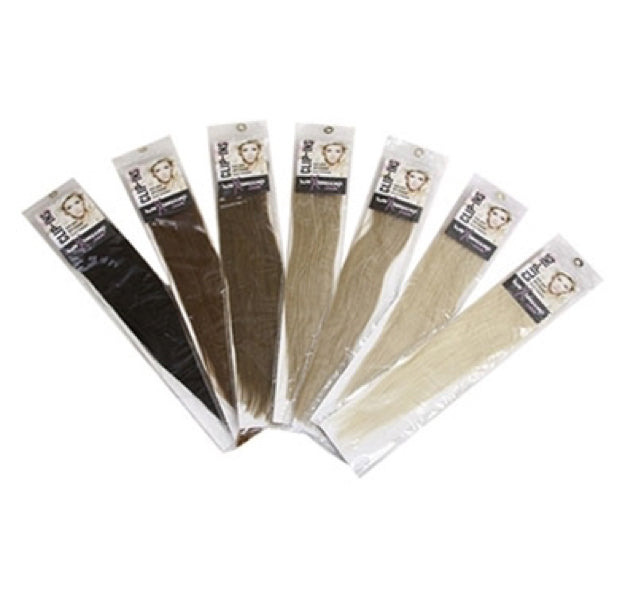
Nail-Tip hair extensions and Hair Wefts can both add noticeable length, volume and thickness, but they create that result in very different ways.
Nail-Tips are individual keratin-bonded strands fitted throughout suitable sections of natural hair, while a Hair Weft is supplied as one wide continuous curtain of hair that can be customised for a professional weave fitting technique.
Neither method is automatically better for everybody. The right choice depends on your natural hair, desired result, attachment preference, maintenance requirements and the fitting plan recommended by your extensionist.
Choose Nail-Tips when individual strand placement and a keratin-bonded fitting suit your natural hair and desired result. Consider a Hair Weft when you want a larger amount of extension hair fitted in professionally constructed rows. Both methods require professional assessment, fitting, aftercare and removal.
Nail-Tip vs Hair Weft: Quick Comparison
| Feature | Nail-Tip / U-Tip | Hair Weft / Weave |
|---|---|---|
| Format | Individual extension strands | Continuous curtain of extension hair |
| Attachment | Pre-formed keratin bond | Depends on the chosen weft fitting technique |
| Heat During Fitting | Professional fusion heat is used to soften the keratin tip | LA Weave, Micro Ring and sewn methods do not require fusion heat |
| Placement | Individual strand-by-strand placement | Hair is distributed in wider fitted rows |
| HairXtensions Lengths | 14", 18", 20" and 22" across selected ranges | 14", 18", 20" and 22" |
| Hair Weight | 0.5g and 1.0g individual strands across selected ranges | Approximately 115g–130g per complete weft depending on length |
| Customisation | Fitter controls the number and placement of individual strands | Continuous weft can be professionally measured and customised for the fitting |
| Maintenance | Professionally monitored during wear and removed when appropriate | Method-specific maintenance or repositioning may be required |
| Removal | Keratin bonds require professional bond-removal techniques | Removal depends on whether the weft was sewn, ring-fitted or bonded |
What Are Nail-Tip / U-Tip Hair Extensions?
Nail-Tip extensions are individual strands of human hair with a pre-formed keratin attachment at the top.
During professional fitting, a suitable section of natural hair is isolated and the keratin tip is softened using a professional heat fusion connector.
The softened keratin is then shaped around the natural-hair section to form the finished attachment.
Because Nail-Tips are fitted strand by strand, the extensionist has flexibility over the position, distribution and number of extensions used throughout the fitting.
Shop Nail-Tip Extensions Read Our Pre-Bonded Extension GuideWhat Are Hair Weft Extensions?
A Hair Weft is a continuous curtain of extension hair joined along a manufactured seam.
HairXtensions wefts are double-wefted and measure approximately 55–60 inches across before professional customisation.
Instead of attaching each extension strand individually, sections of the weft are fitted in rows using the professional technique selected by the extensionist.
Popular fitting methods include LA Weave, Micro Ring or beaded weft techniques and traditional sewn applications.
Shop Hair Wefts Compare Hair Weft Fitting MethodsDifference #1: Individual Strands vs Fitted Rows
Nail-Tips
Each extension strand has its own attachment, allowing the fitter to distribute strands individually around suitable areas of natural hair.
Hair Wefts
A larger amount of extension hair is distributed across each fitted row rather than being divided into individual keratin bonds.
Neither system is automatically superior. The different construction simply gives the extensionist different ways to build length and volume.
Difference #2: The Fitting Technique
Nail-Tips use one defined attachment principle: a pre-formed keratin tip is softened and shaped around natural hair using controlled professional fusion heat.
Hair Wefts are more flexible because the same continuous weft can be used with several professional fitting techniques.
LA Weave
Small rings or beads create a foundation before the weft is sewn into position.
Micro Ring Weft
Compatible rings or beads are used as part of the fitted weft structure.
Sew-In Weave
The weft is sewn onto a professionally prepared foundation using suitable extension thread.
Professional Adhesive
Selected professional methods may use an adhesive system specifically designed for that type of weft application.
Difference #3: Hair Weight
Hair weight is important whichever method you choose.
HairXtensions Nail-Tips are available in selected 0.5g and 1.0g individual strand options, allowing the professional fitter to control how much extension hair is added at each individual attachment.
HairXtensions Hair Wefts contain approximately 115g–130g across the complete continuous piece depending on the selected length. The fitter then decides how much of that weft is appropriate for the installation.
More hair is not automatically better. The amount and weight of extension hair should suit the client's natural hair rather than simply aiming for the maximum possible fullness.
Are Nail-Tips Better for Fine Hair?
Not automatically.
The older idea that Nail-Tips should always be chosen for fine hair is too simplistic.
Individual-strand placement can give the fitter useful control over extension distribution and strand weight, but the client's natural hair still needs to be strong enough to support each attachment.
Fine hair varies enormously in density, strength and condition, so a professional suitability assessment is essential.
Are Hair Wefts Only for Thick or Coarse Hair?
No.
Hair Wefts should not automatically be limited to one particular natural hair texture.
What matters is whether the client's natural hair can appropriately support the selected weft weight, row placement and fitting technique.
A professional fitter may alter the amount of weft used, number of rows, placement and fitting construction according to the client's natural hair.
Neither method is universally suitable. Fine, fragile, thinning or damaged natural hair may require a different extension plan or may not be suitable for the proposed extension weight at all.
Which Method Gives More Placement Control?
Nail-Tips offer particularly detailed strand-by-strand placement because every extension is attached individually.
This can help the extensionist distribute colour, length and volume across specific suitable sections of the natural hair.
Hair Wefts work differently. Rather than distributing hundreds of individual bonds, larger amounts of hair are positioned along carefully planned fitted rows.
The best approach depends on the finished result and the client's natural hair rather than one method being inherently better.
Which Method Can Add More Fullness?
Both methods can create substantial fullness.
A Hair Weft contains a relatively large amount of hair in one continuous piece, making it useful when a fitting plan requires noticeable volume distributed across wider rows.
Nail-Tips build fullness progressively using individually fitted strands, allowing the professional to adjust the quantity throughout the head.
Final fullness is therefore influenced by the amount of extension hair fitted rather than simply the attachment method itself.
Which Is More Discreet?
Discretion depends on placement, natural-hair density and the fitting technique.
Nail-Tips create multiple small individual bonds that can be distributed beneath suitable natural-hair coverage.
Wefts create wider fitted rows. Those rows need to be positioned where sufficient natural hair can cover the attachment.
Neither method should be fitted too close to exposed hairlines or partings if the attachment would be visible.
Which Method Uses Heat?
Nail-Tip fitting uses controlled professional heat to soften the keratin tip during application.
The heat is applied to the keratin attachment rather than being used as a general styling treatment on the natural hair.
Many common weft fitting techniques such as LA Weave, Micro Ring Weave and traditional sew-in methods do not require fusion heat.
However, being heat-free does not automatically make a method damage-free. Extension weight, placement, tension, maintenance and removal remain important whichever technique is used.
Which Method Needs More Maintenance?
The two methods have different maintenance requirements rather than one simply requiring "more" maintenance.
Nail-Tips
Keratin bonds grow further away from the scalp as the natural hair grows. They should be professionally monitored during wear and professionally removed when appropriate.
Hair Wefts
Ring-supported or sewn rows may require professional maintenance, repositioning or refitting as natural hair grows.
The correct appointment schedule depends on the individual client and fitting technique rather than one universal number of weeks.
Read Our Maintenance GuideWhich Is Easier to Remove?
Both should be professionally removed using the correct method.
Nail-Tip Removal
Keratin bonds are professionally broken down using suitable keratin remover and removal tools before the extension is gently released.
Hair Weft Removal
The removal process depends on the installation. Rings may need to be reopened, extension thread released or professional adhesive remover used.
Never pull fitted extensions out. Nail-Tips and Wefts should both be fully released from their attachment system before the extension hair is removed.
Can Nail-Tip Hair Be Reused?
Suitable Nail-Tip extension hair may potentially be reused if the hair remains in appropriate condition.
The old keratin attachment needs to be professionally removed and the extension hair re-tipped using suitable keratin before another fitting.
Not every strand will necessarily remain suitable for reuse.
Read Our Re-Tipping GuideCan Hair Wefts Be Reused?
A Hair Weft may also be reusable if the extension hair and manufactured seam remain in suitable condition.
Previously cut or modified sections should be checked carefully before refitting, particularly around altered edges.
The fitter should assess the extension hair rather than assuming a weft can be repeatedly reused indefinitely.
Read Our Hair Weft Removal GuideHow Long Do Nail-Tips & Hair Wefts Last?
It is important to separate the lifespan of the extension hair from the length of time a particular fitting remains suitable.
HairXtensions human hair generally has an expected usable lifespan of around 2–3 months with suitable care, although individual results vary.
This does not mean every attachment should simply be left untouched for three months.
Weft maintenance depends on the fitting technique and natural-hair growth, while Nail-Tip bonds should be professionally monitored throughout wear.
Do They Need Different Aftercare?
Much of the extension-hair aftercare is similar, but the attachment areas require method-specific care.
Nail-Tip Aftercare
Keep oils, rich conditioners and creamy treatments away from keratin bonds. Avoid concentrated direct heat on the attachments.
Hair Weft Aftercare
Keep fitted rows separated, brush carefully around the installation and make sure the natural hair underneath and around the row is thoroughly dried.
With either method, avoid sleeping with fitted extensions wet, use suitable heat protection on the lengths and minimise chlorine and salt-water exposure.
Read Our Complete Aftercare GuideNail-Tip vs Hair Weft: Which Should You Choose?
Consider Nail-Tips If...
- You want individual strand-by-strand placement
- Your fitter wants precise control over strand distribution
- A keratin-bonded method suits your natural hair
- You are comfortable with professional fusion fitting
- You understand the bond-specific aftercare and removal process
Consider a Hair Weft If...
- You want extension hair distributed across fitted rows
- A professional weave technique suits your natural hair
- You want a continuous weft that can be customised for fitting
- You are comfortable with method-specific maintenance
- Your fitter believes the row weight and placement are appropriate
Don't choose by hair type alone. Statements such as "Nail-Tips are for thin hair" or "Wefts are only for thick hair" are too broad. Natural-hair density, strength, condition, extension weight, placement and fitting technique all need to be considered.
What Should Your Extensionist Assess?
Before recommending either method, a professional should consider:
- Natural-hair density
- Natural-hair strength and condition
- Existing breakage or thinning
- Desired extension length
- Desired volume and fullness
- Amount of extension weight required
- Attachment placement and coverage
- Usual hairstyles
- Washing and styling routine
- Maintenance commitment
- Future professional removal
The goal is to create the desired cosmetic result while keeping the extension weight and fitting appropriate for the natural hair.
Don't Forget the Colour Match
Whichever extension method you choose, getting the colour right is an important part of creating a natural blend.
HairXtensions offers natural and ombre shades across both Nail-Tip and Hair Weft ranges.
We recommend choosing the closest available shade before fitting rather than planning to bleach, colour or tone the extension hair afterwards.
View Colour Chart Get Colour Match HelpNail-Tip vs Hair Weft – FAQs
What is the main difference between Nail-Tips and Hair Wefts?
Nail-Tips are individual keratin-bonded extension strands, while a Hair Weft is a continuous curtain of extension hair that is professionally fitted in wider rows.
Are Nail-Tip extensions better for fine hair?
Not automatically. Individual strand placement can give the fitter detailed control, but the natural hair still needs to be assessed for appropriate strand weight, section size and attachment suitability.
Are Hair Wefts only suitable for thick hair?
No. Suitability depends on natural-hair strength and density, the amount of extension hair used, the fitting method and how the weight is distributed.
Which method uses heat?
Nail-Tip extensions use controlled professional fusion heat to soften the keratin attachment. Many common Hair Weft techniques such as LA Weave and Micro Ring Weave do not require fusion heat.
Which adds more volume?
Both methods can create significant volume. Wefts add larger sections of hair across fitted rows, while Nail-Tips build fullness using individually distributed strands.
Can Nail-Tip extensions be reused?
Suitable extension hair may potentially be professionally re-tipped and reused if its condition remains appropriate for another fitting.
Can Hair Wefts be reused?
Potentially. A professional should assess the hair, weft seam and any cut or modified edges before deciding whether it remains suitable for refitting.
Which hair extension method lasts longer?
There is no universal winner. Hair lifespan and fitting duration are affected by the extension hair, application method, natural-hair growth, maintenance, styling and aftercare.
Choose the Fitting Method That Suits Your Hair
Nail-Tips and Hair Wefts can both create beautiful length and volume, but they distribute extension hair very differently. Nail-Tips offer individual strand placement, while Wefts build the result using professionally fitted rows. Have your natural hair assessed and choose the method, weight and placement that best suit your individual fitting plan.
Shop Nail-Tip Extensions Shop Hair Wefts